
Traditional Thai massage is more than a sequence of stretches and pressure techniques. At its foundation is a traditional healing framework known as Sen, a network of pathways believed to guide the movement of vital energy, or Lom Pran, throughout the body. Understanding these lines provides valuable insight into why Thai massage follows particular pressure points, pathways, stretches, and rhythmic movements.
The Sen Prathan Sib, or Ten Primary Energy Lines, is one of the central concepts in traditional Thai massage. Learning about these traditional pathways can provide visitors with a deeper appreciation of what makes authentic Thai massage in Bangkok distinctive.
What Are Sen Energy Lines?
The Thai word “Sen” can be understood as a line, pathway, or channel. In traditional Thai medicine, Sen refers to pathways associated with the movement of Lom, often translated as wind, breath, or vital energy.
Traditional Thai massage commonly focuses on ten principal pathways known as Sen Sib or Sen Prathan Sib. These pathways form a traditional map used by practitioners to organize pressure, movement, and treatment.
It is important to understand that Sen lines are part of a traditional therapeutic model, rather than anatomical structures that have been identified as physical tubes or nerves in modern medicine. Modern anatomy and traditional Sen theory describe the body through different frameworks.
The Ten Primary Sen Lines
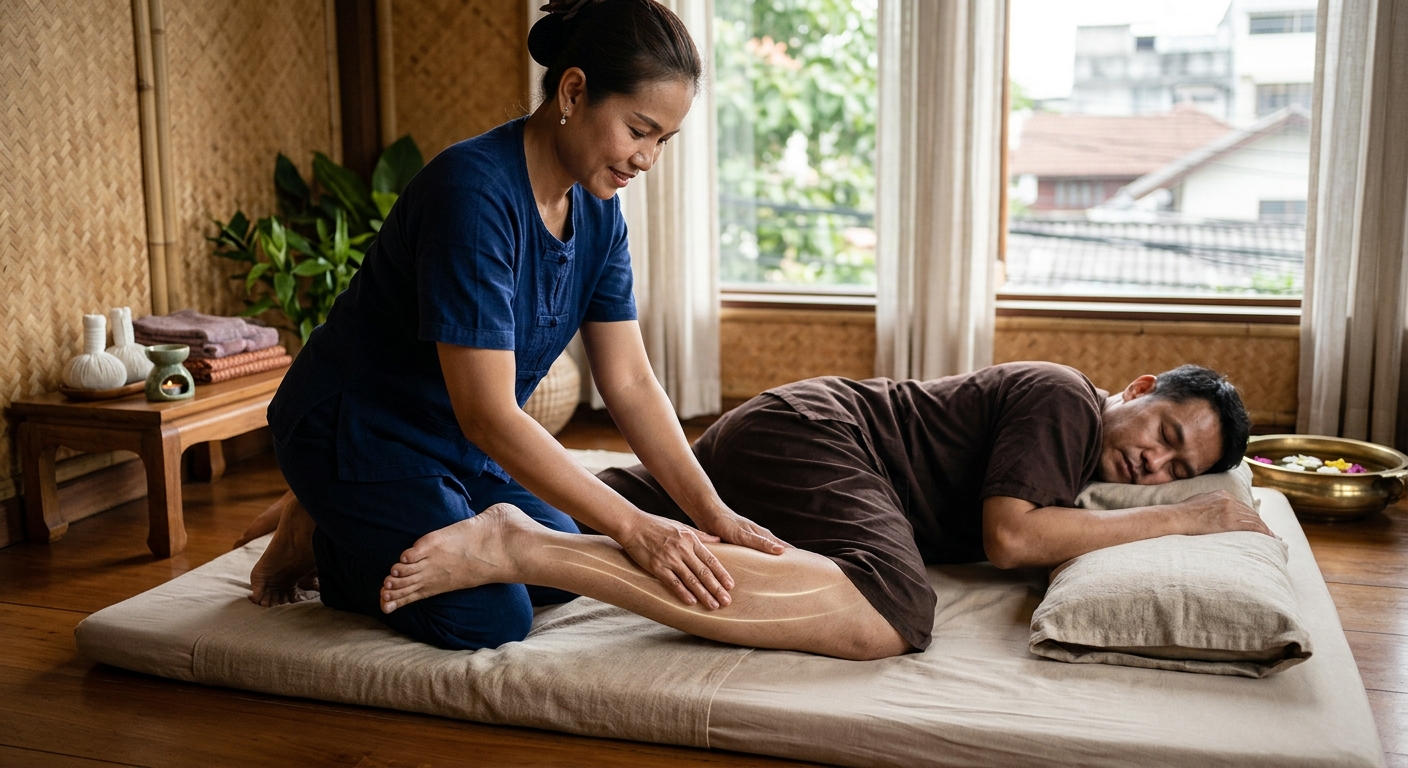
The traditional Thai massage system identifies ten primary Sen lines:
- Sen Sumana
- Sen Ittha
- Sen Pingkhala
- Sen Kalathari
- Sen Sahatsarangsi
- Sen Thawari
- Sen Chanthaphusang
- Sen Rucham
- Sen Sukhumang
- Sen Sikini
Descriptions of the precise pathways can vary between historical texts, teaching traditions, and Thai massage schools. Nevertheless, these ten lines remain an important part of the traditional Sen framework.
Sen Sumana: The Central Pathway
Sen Sumana is traditionally described as a central pathway extending upward from the abdominal region toward the chest and throat.
In traditional Thai massage, work around this central pathway forms part of the broader approach to balancing and stimulating the body's energy system.
Rather than viewing Sen Sumana as a physical anatomical structure, it is more useful to understand it as part of the traditional map that guides a practitioner's approach to the body.
Sen Ittha and Sen Pingkhala
Sen Ittha and Sen Pingkhala are two important pathways in the traditional Sen system. Their names and concepts have similarities with Ida and Pingala in Indian yogic traditions.
These pathways are incorporated into traditional Thai massage sequences involving pressure, movement, and stretching. Their role is best understood within the context of Thai traditional medicine rather than as direct equivalents of structures in Western anatomy.
Sen Kalathari
Sen Kalathari is one of the most widely discussed Sen lines because of its extensive traditional pathway through the body.
Traditional descriptions associate it with pathways extending toward the limbs. This makes it relevant to Thai massage sequences involving the arms, legs, and whole-body movement.
Thai massage does not generally isolate one muscle at a time. Instead, practitioners may combine pressure along traditional pathways with stretching and assisted movements to create an integrated treatment.
Sen Sahatsarangsi and Sen Thawari
Sen Sahatsarangsi and Sen Thawari are traditionally associated with pathways extending through the body toward the limbs.
A Thai massage therapist may work along areas associated with these pathways while incorporating pressure, stretching, and rhythmic movement.
The purpose is not simply to “massage a line.” Instead, the Sen system provides a traditional framework for deciding where pressure and movement are applied during a treatment.
Sen Chanthaphusang and Sen Rucham
Sen Chanthaphusang and Sen Rucham are also included among the traditional Ten Primary Energy Lines.
As with the other Sen lines, their importance comes from their place within the traditional Thai medical system rather than from their correspondence to a single identifiable anatomical structure.
Historical Thai massage knowledge has been preserved through texts, temple traditions, teaching systems, and practical transmission from one generation of practitioners to another.
Sen Sukhumang and Sen Sikini
Sen Sukhumang and Sen Sikini complete the traditional group of ten primary Sen lines.
Visitors may encounter different spellings or transliterations of these names depending on the source or Thai massage school. They nevertheless form part of the traditional framework known as Sen Prathan Sib.
For someone receiving Thai massage, memorizing all ten names is not necessary. The more important point is understanding that traditional Thai massage is based on a structured system rather than simply being a collection of relaxing massage movements.
How Therapists Work With Sen Lines
During a traditional Thai massage session, the therapist may use a combination of techniques, including:
- Thumb and finger pressure
- Palm pressure
- Rhythmic compressions
- Assisted stretching
- Joint movements
- Pressure along traditional Sen pathways
- Gentle rocking and mobilization
- Coordinated breathing and movement
This explains why Thai massage can feel very different from an oil massage or Swedish-style massage. Instead of concentrating primarily on rubbing muscles, traditional Thai massage combines pressure, stretching, assisted movement, and rhythmic techniques into a structured full-body experience.
Sen Lines and the Thai Massage Experience
One reason Thai massage can feel particularly distinctive is the combination of pressure, stretching, movement, and rhythm.
A therapist may gradually work from one area of the body to another, using traditional pathways as a framework. The treatment can include both focused pressure and broader movements, creating a session that engages different areas of the body.
Modern research has also investigated Thai massage for outcomes such as flexibility, perceived muscle tension, and musculoskeletal discomfort. However, these findings should not be interpreted as scientific confirmation that traditional energy flows physically through Sen lines.
Sen Lines vs. Western Anatomy
One of the most important things to remember is that Sen lines are not the same as nerves, blood vessels, muscles, or fascia.
Western anatomy describes the body through physical structures that can be observed and measured. The Sen system represents a traditional Thai understanding of how energy and bodily function are organized.
Modern researchers have explored possible relationships between traditional Sen pathways and anatomical structures. However, the traditional framework and modern anatomy should not be treated as identical systems.
For this reason, it is useful to appreciate Sen as part of Thailand's traditional therapeutic heritage while keeping traditional concepts distinct from established anatomical science.
Why Understanding Sen Can Improve Your Thai Massage Experience
Knowing the basic idea behind Sen can help you better appreciate what happens during a traditional Thai massage.
Instead of wondering why a therapist is applying pressure to a particular area or repeatedly following a certain pathway, you can understand that these movements are connected to a traditional therapeutic system developed and transmitted over generations.
This knowledge can also help visitors distinguish traditional Thai massage from treatments that simply use the name “Thai massage” while following a substantially different approach.
For visitors to Bangkok, this cultural understanding can turn a massage appointment into more than a relaxation experience. It can become an introduction to an important part of Thailand's traditional wellness heritage.
Is Sen Massage Suitable for Everyone?
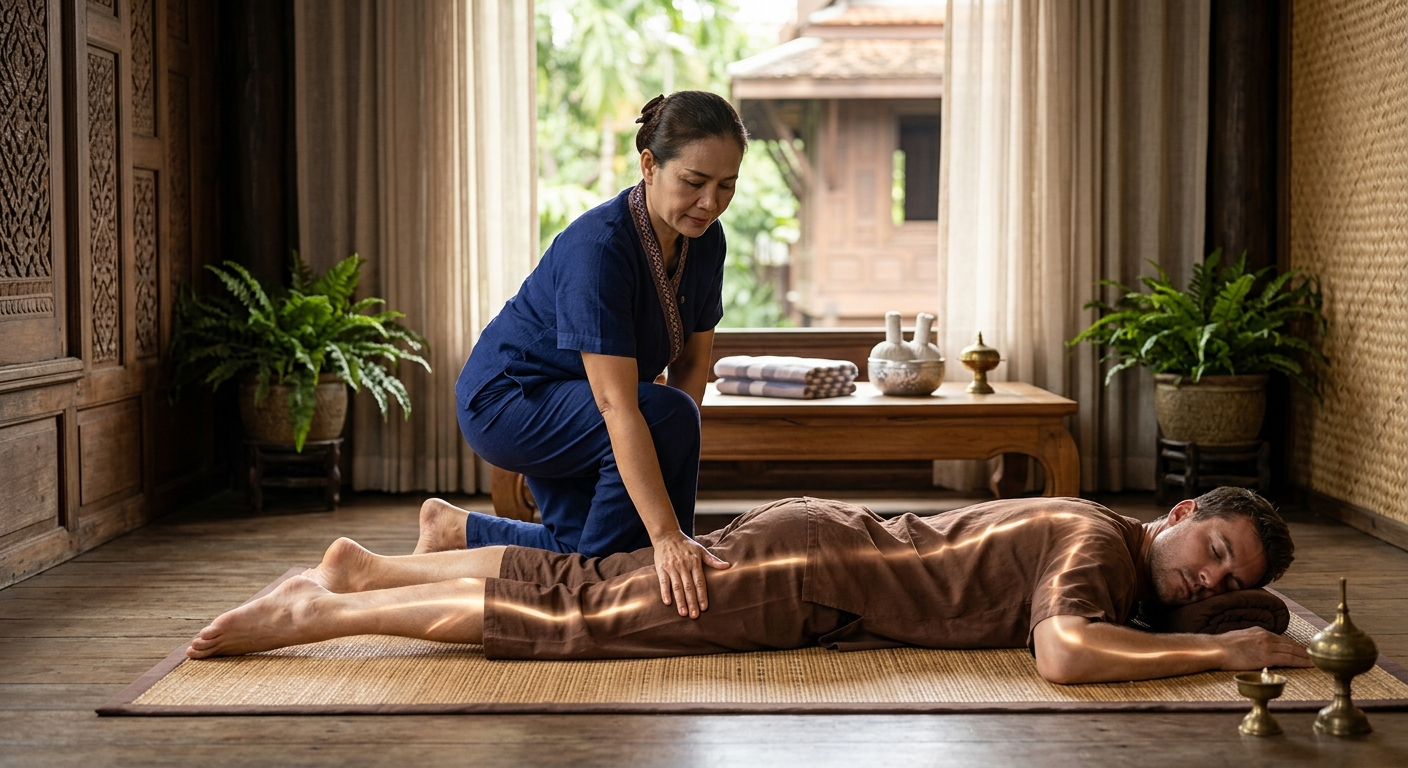
Thai massage can involve substantial pressure, stretching, and joint movement. Your therapist should therefore know about relevant injuries, physical limitations, recent surgery, pregnancy, or other health considerations before treatment.
A qualified practitioner should adapt techniques and pressure according to the individual rather than applying every technique in exactly the same way.
If you have a medical condition, significant pain, an acute injury, or uncertainty about whether massage is appropriate for you, consult an appropriate healthcare professional before receiving treatment.
The Cultural Heritage Behind Sen
The Sen system is part of a much broader Thai traditional medicine heritage. Knowledge of Thai massage has been preserved through historical manuscripts, temple traditions, formal education, and practical instruction.
Wat Pho in Bangkok is particularly important to the history of Thai massage. Historical massage illustrations and inscriptions preserved there have helped document traditional massage knowledge and provide insight into the development of Thai massage practices.
This heritage helps explain why learning about Sen is valuable for anyone interested in authentic Thai massage in Bangkok.
Experience Thai Massage With a Deeper Understanding
The Sen energy lines provide a fascinating window into the philosophy behind traditional Thai massage. The Ten Primary Energy Lines, or Sen Prathan Sib, form a traditional framework that helps practitioners organize pressure, movement, and therapeutic sequences.
While modern anatomy and traditional Sen theory describe the body in very different ways, both perspectives can contribute to a richer understanding of Thai massage. Traditional Sen concepts explain the cultural and therapeutic framework of the practice, while modern research can investigate its physical effects through different mechanisms.
Whether you are visiting Bangkok for the first time or already familiar with Thai massage, understanding Sen can help you appreciate the practice beyond its physical techniques—and discover the traditional knowledge, history, and philosophy that make Thai massage such a distinctive part of Thai wellness culture.
Frequently Asked Questions About Sen Energy Lines
What does Sen mean in Thai massage?
Sen refers to traditional pathways or lines associated with the movement of vital energy in Thai traditional medicine. Thai massage commonly focuses on ten principal lines known as Sen Prathan Sib.
How many Sen lines are there?
Traditional Thai massage identifies ten primary lines, known as Sen Sib. Traditional theory also describes a much larger network of energy pathways.
Are Sen lines the same as nerves or muscles?
No. Sen lines belong to a traditional Thai medical framework and should not be treated as directly equivalent to anatomical structures such as nerves, muscles, or blood vessels.
Why are Sen lines important in Thai massage?
They provide a traditional framework for applying pressure and organizing massage sequences, stretches, and movements.
Can Sen lines explain all the benefits of Thai massage?
Not scientifically. Sen theory explains Thai massage from a traditional perspective, while modern research investigates possible physical and psychological effects through different mechanisms.
Where can I learn more about Thai massage in Bangkok?
Thai-Massage-Bangkok.com provides information and guidance about Thai massage, its techniques, traditions, and wellness experiences in Bangkok and Thailand.