
Thai massage is more than a relaxing wellness treatment. It is a traditional healing art shaped by generations of knowledge, hands-on experience, and a deep understanding of the human body. Behind every skilled Thai massage therapist lies a journey of learning, patience, and dedication. From the first lesson in proper posture to the confident application of advanced techniques, becoming a Thai massage practitioner requires much more than memorizing a sequence of movements.
For aspiring therapists, Thailand offers an opportunity to discover this remarkable tradition where it has been practiced and developed for centuries. In Bangkok, the learning journey can include structured training, practical demonstrations, mentorship, and exposure to the country's vibrant wellness culture.
But what does it really take to progress from a beginner to an experienced Thai massage professional? Understanding the stages of apprenticeship reveals the discipline, knowledge, and personal growth behind this respected craft.
Understanding the Roots of Traditional Thai Massage
Before learning individual techniques, an apprentice must understand the cultural background of Thai massage, also known as Nuad Thai. This traditional practice combines rhythmic pressure, assisted stretching, acupressure-inspired techniques, and carefully controlled body movements to support relaxation and mobility.
Thai massage has a long history in Thailand, with knowledge traditionally passed from experienced practitioners to students through observation and hands-on instruction. Today, this heritage continues through traditional teaching methods, professional training schools, and structured educational programs. Nuad Thai was inscribed on UNESCO's Representative List of the Intangible Cultural Heritage of Humanity in 2019, highlighting its cultural importance.
For an apprentice, learning this history provides a foundation for understanding why Thai massage is approached as a complete practice rather than simply a collection of physical techniques.
Traditional Thai massage may also incorporate concepts such as Sen lines, which are understood within Thai traditional medicine as pathways associated with the body's flow of energy. Students learn how these traditional concepts inform massage sequences while also developing practical knowledge of anatomy, body mechanics, and client comfort.
Respect for the tradition is an essential starting point. A skilled practitioner must understand not only how to perform a technique but also when, why, and how to apply it appropriately.
Stage One: The First Steps of a Thai Massage Apprentice
Every expert begins as a beginner. The earliest stage of Thai massage training focuses on building a reliable foundation before attempting more complicated movements.
New apprentices typically begin by studying the basic principles of Thai massage, including:
- The history and cultural significance of Nuad Thai.
- Basic anatomy and an introduction to muscles and joints.
- Proper positioning of the client and therapist.
- Hand placement and controlled pressure.
- Fundamental massage movements and sequences.
- Hygiene, professional conduct, and client communication.
- Safety precautions and situations in which massage should be avoided or modified.
These fundamentals may appear simple, but they are essential to developing good habits. Incorrect posture, excessive pressure, or poor positioning can affect both the therapist and the client.
For example, beginners learn to use their body weight efficiently rather than relying entirely on their fingers or thumbs. This approach can help reduce unnecessary strain on the therapist while allowing more controlled pressure.
Thai massage requires coordination, balance, and sensitivity. An apprentice must learn to position the body correctly, maintain stability, and move smoothly between techniques.
Early exercises may involve practicing kneeling and sitting positions, maintaining a comfortable posture, and coordinating breathing with movement. Students also learn to recognize the difference between applying controlled pressure and forcing a stretch.
Progress takes time. Repetition helps beginners become familiar with movements, while instructor feedback helps correct mistakes before they become habits.
The objective at this stage is not speed or complexity. It is to establish safe, consistent technique and a genuine understanding of the fundamentals.
Stage Two: Learning Through Observation and Mentorship
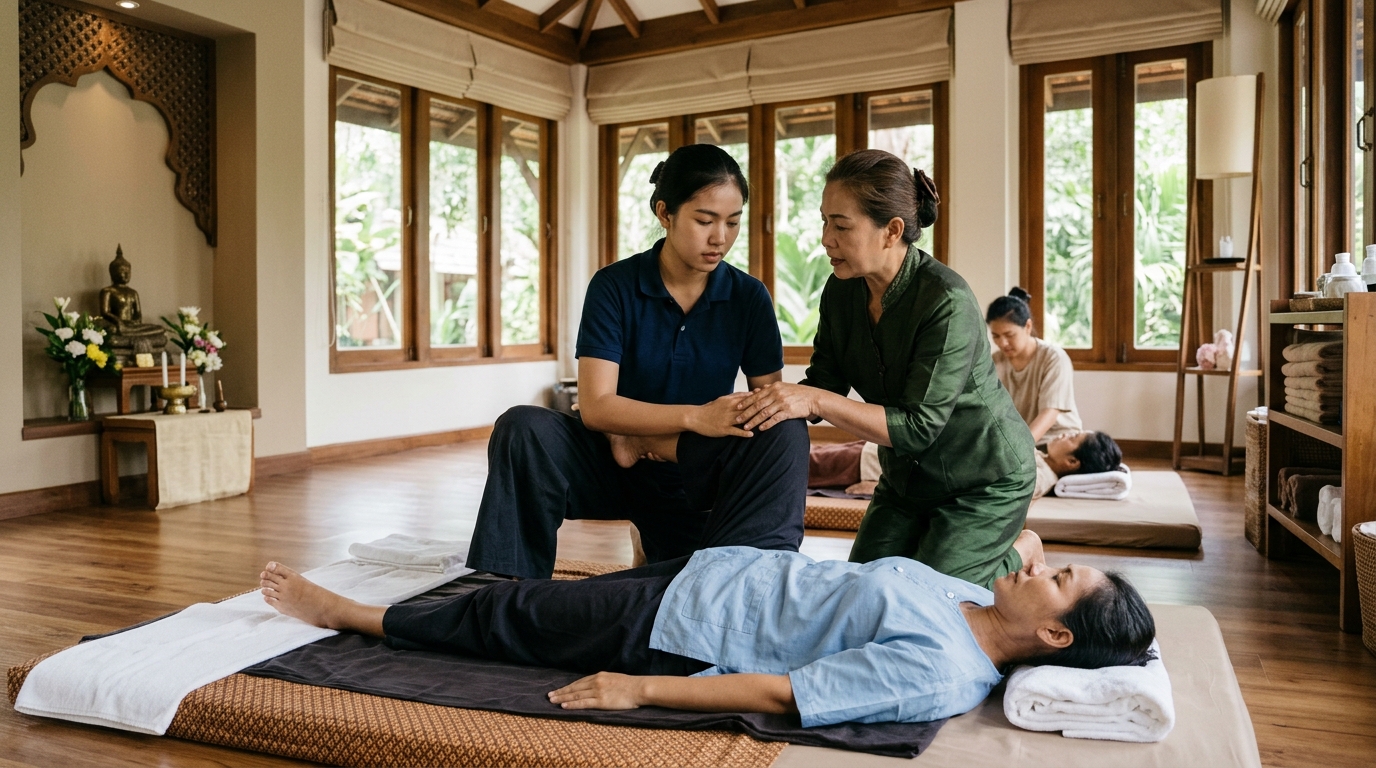
One of the most valuable parts of a Thai massage apprenticeship is learning from experienced practitioners. Although modern schools may follow formal curricula, observation and direct guidance remain important elements of practical training.
Before performing unfamiliar techniques independently, apprentices benefit from observing how an experienced therapist works.
They learn to notice details that may not be obvious in written instructions, such as:
- How the therapist positions their body before applying pressure.
- How pressure is gradually increased or reduced.
- How one movement transitions naturally into another.
- How the therapist responds to the client's breathing and feedback.
- How the session is adjusted to accommodate comfort and mobility.
Watching a demonstration helps students understand the purpose behind each movement. It also shows how a practitioner can maintain a calm rhythm without making a massage feel mechanical.
Mentorship allows students to identify weaknesses and improve through repeated practice. An instructor may correct the angle of a hand, demonstrate a more stable position, or explain why a particular stretch requires greater caution.
This feedback is especially important because a technique that looks correct from a distance may feel uncomfortable or unstable when performed.
A good apprentice learns to ask questions, accept correction, and remain patient. Rather than attempting to imitate an instructor perfectly on the first try, the student gradually develops accuracy and confidence.
The relationship between teacher and student also reinforces professional values: respect, responsibility, attentiveness, and a commitment to continuous learning.
Stage Three: Mastering Pressure, Rhythm, and Technique
Once the fundamentals become familiar, apprentices begin refining the qualities that distinguish competent massage from thoughtful, individualized bodywork.
Pressure is one of the most important skills in Thai massage. Applying more force does not automatically produce a better result. Effective practice depends on control, technique, and the individual client's needs.
Apprentices learn to apply pressure gradually, communicate with clients, and recognize when a movement should be softened, modified, or stopped.
They must also understand that clients have different comfort levels, physical capabilities, and health considerations. A technique that feels comfortable for one person may be unsuitable for another.
A well-performed Thai massage often follows a deliberate rhythm. Movements should connect smoothly, allowing the practitioner to work systematically without rushing.
During this stage, students practice transitioning between techniques while maintaining appropriate positioning and consistent attention to the client.
They also learn how to structure a session, manage time, and avoid unnecessary repetition. As their confidence increases, they become more capable of maintaining a calm, professional experience from beginning to end.
Many Thai massage traditions incorporate the concept of Sen lines. Apprentices may study how these traditional pathways influence the organization of massage techniques and the interpretation of bodily discomfort within Thai traditional medicine.
Training should distinguish these traditional concepts from established anatomical structures. Students benefit from learning both the cultural framework of Thai massage and the contemporary knowledge needed to work responsibly with muscles, joints, and soft tissues.
Understanding these perspectives allows practitioners to appreciate the heritage of Thai massage while maintaining clear professional boundaries.
Stage Four: Practicing Under Supervision
Practical experience is where theoretical knowledge begins to develop into professional ability. At this stage, apprentices practice complete massage sequences under the guidance of a qualified instructor.
Performing a single movement correctly is different from delivering an entire session. Students must learn to organize techniques into a logical sequence while maintaining consistent attention to comfort and safety.
Supervised practice helps apprentices develop the ability to:
- Prepare a clean, comfortable treatment environment.
- Explain the session and obtain informed consent.
- Ask about relevant health concerns and physical limitations.
- Check pressure preferences and comfort throughout the treatment.
- Adapt positioning and techniques when appropriate.
- Recognize when a technique should be avoided.
- Complete the session professionally and invite feedback.
These skills help create an experience that feels attentive rather than routine.
Practice partners and supervised clients can provide valuable feedback about pressure, positioning, pacing, and communication.
An apprentice may discover that a movement feels awkward from the receiving person's perspective or that a transition interrupts the relaxation of the session. Such observations provide opportunities to refine technique.
Constructive feedback should be treated as part of the learning process, not as a sign of failure.
Repeated practice also helps students identify their strengths and weaknesses. Some may develop excellent hand control early on, while others may need more time to improve coordination or maintain a comfortable working posture.
Progress is rarely identical for every student. Consistent effort and appropriate supervision matter more than rushing through the learning stages.
Stage Five: Understanding Anatomy, Safety, and Professional Responsibility
Technical skill alone is not enough to become a responsible Thai massage practitioner. Professional training also requires knowledge of the body, awareness of potential risks, and an understanding of ethical responsibilities.
Basic anatomy and physiology help massage students understand muscles, joints, movement, and the limits of manual techniques.
This knowledge is particularly important when working with stretches or applying pressure around sensitive areas. Students should learn to recognize discomfort, avoid forceful manipulation, and understand that massage is not a substitute for medical diagnosis or treatment.
Certain medical conditions, injuries, symptoms, or stages of recovery may require massage to be avoided, modified, or postponed. Apprentices must learn to ask appropriate screening questions and recognize situations that require referral to a qualified healthcare professional.
They should never attempt to diagnose a client or promise that Thai massage will cure a medical condition.
Safe practice includes obtaining consent, respecting personal boundaries, maintaining confidentiality, and stopping a technique whenever the client reports concerning discomfort.
A clean and organized treatment environment is an essential part of professional massage practice.
Apprentices learn appropriate hand hygiene, cleaning procedures, fresh linens, equipment care, and professional presentation. They also develop communication skills that help clients feel respected and comfortable.
These responsibilities may not be as visible as advanced massage techniques, but they are fundamental to building trust.
Stage Six: Exploring Different Thai Massage Traditions and Specializations
As apprentices gain experience, they may explore different approaches and complementary techniques within the broader Thai wellness tradition.
Depending on their training program and professional goals, these may include:
- Traditional Thai massage: A combination of rhythmic pressure, assisted stretching, and structured bodywork performed according to the practitioner's training.
- Foot massage: A treatment focused on the feet and lower legs, using appropriate pressure and massage movements.
- Herbal compress massage: A technique that incorporates warmed herbal compresses. Students must learn appropriate temperature control, skin precautions, and safe application.
- Aromatic oil massage: A massage approach using suitable massage oils and flowing movements, requiring additional training in product selection and skin sensitivity.
- Head, neck, and shoulder massage: Techniques focused on areas where clients commonly report tension, with particular attention to the sensitivity of the neck and surrounding structures.
Each specialization requires its own practical instruction and safety considerations. Learning additional techniques can broaden a therapist's professional opportunities, but it should never replace a strong foundation in traditional Thai massage.
Stage Seven: From Apprentice to Professional Practitioner
Completing a course or apprenticeship is an important milestone, but professional readiness involves more than receiving a certificate.
Students need to demonstrate that they can perform the techniques taught in their program, understand safety precautions, communicate effectively, and maintain professional standards.
For those planning to study in Thailand, selecting an appropriate school is an important decision. Prospective students should examine the curriculum, teaching methods, instructor qualifications, practical training hours, and the recognition of any certificates awarded.
In Thailand, training and registration requirements depend on the intended role and applicable regulations. Students seeking to work professionally should confirm the current requirements with the relevant Thai authorities and choose a program that meets the standards applicable to their career goals.
A short introductory workshop may be useful for personal interest, but it should not automatically be assumed to qualify someone for professional practice.
New graduates often continue developing their skills through supervised work, professional mentoring, and regular practice.
Early professional experience teaches lessons that cannot be fully learned in a classroom. Therapists discover how to manage different client expectations, maintain consistent service quality, organize appointments, and adapt sessions within their training and professional scope.
They also learn the importance of self-care. Thai massage can be physically demanding, and practitioners benefit from sound body mechanics, appropriate rest, and techniques that reduce unnecessary strain on their hands, wrists, shoulders, and back.
A successful professional career depends on balancing technical ability with sustainable working habits.
Stage Eight: The Journey Toward Mastery
Mastery in Thai massage is not simply the ability to perform a long sequence of techniques. It involves combining knowledge, experience, judgment, and sensitivity into a consistent professional practice.
An experienced practitioner can recognize when a familiar approach needs to be adjusted, when a client requires a gentler treatment, and when a request falls outside their expertise.
With continued practice, therapists may develop a distinctive rhythm and approach while respecting the principles of their training.
This does not mean abandoning established techniques or improvising without care. Instead, it means learning how to apply familiar movements appropriately to different situations.
Experience helps practitioners become more attentive to small details, including the client's comfort, the smoothness of transitions, and the overall structure of a session.
Thai massage continues to evolve through formal education, professional exchange, and the preservation of traditional knowledge.
Experienced therapists can benefit from advanced courses, refresher training, workshops, and opportunities to learn from other qualified practitioners.
Continuing education also helps professionals remain aware of updated safety guidance, applicable regulations, and changing client expectations.
Some experienced practitioners eventually become instructors, sharing their knowledge with the next generation of students.
Teaching requires a different set of skills from performing massage. A mentor must explain techniques clearly, identify mistakes, provide constructive feedback, and encourage students to develop safe and independent judgment.
By teaching responsibly, experienced practitioners help preserve Thai massage traditions while supporting high standards of professional practice.
The Importance of Patience and Discipline in Thai Massage Training
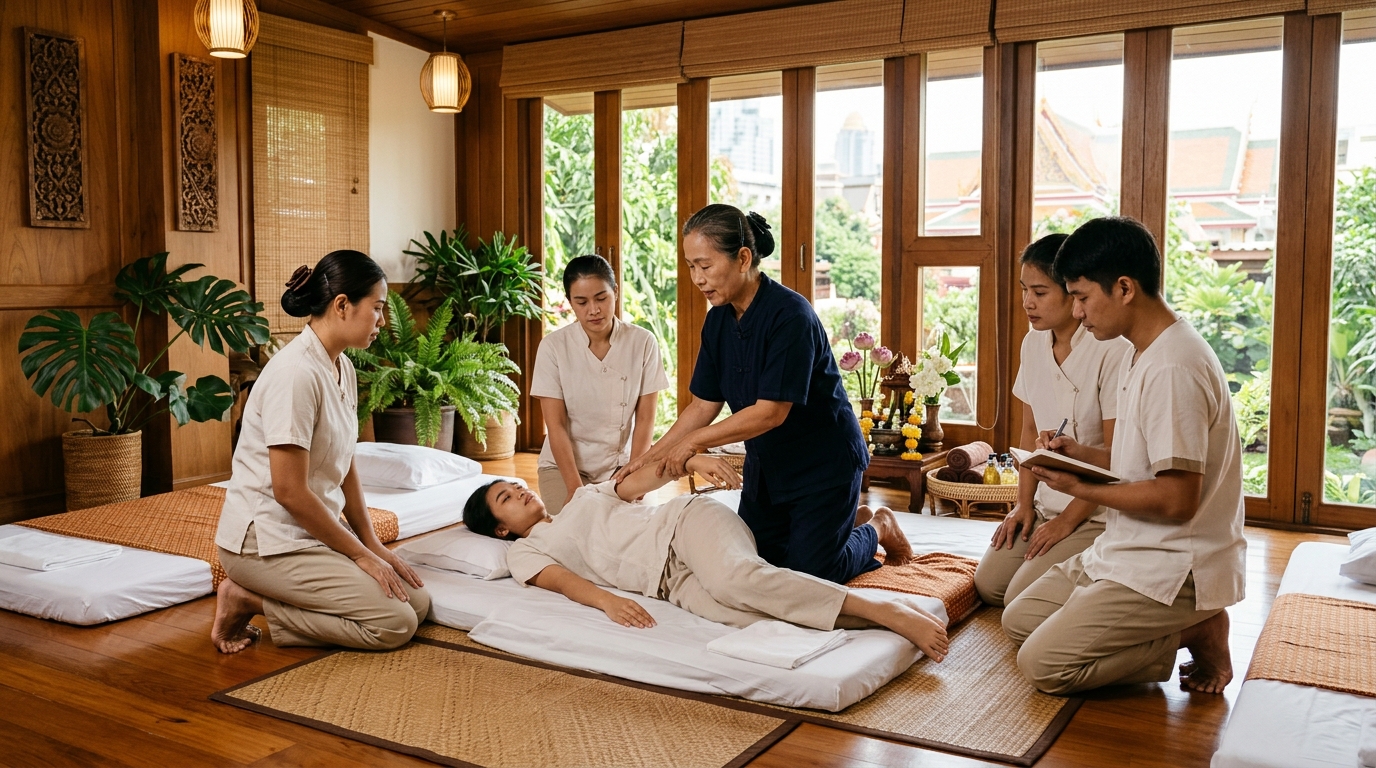
The journey from novice to master rarely follows a straight line. Some techniques may become familiar quickly, while others require weeks or months of repetition and correction.
Successful apprentices tend to share several qualities:
- Patience: They understand that meaningful progress takes time.
- Consistency: They practice regularly rather than relying on occasional intensive sessions.
- Curiosity: They ask questions and seek to understand the purpose behind each movement.
- Humility: They accept feedback and remain open to improvement.
- Responsibility: They prioritize client safety, consent, and comfort.
- Respect: They value the cultural heritage of Thai massage and the people who preserve it.
These qualities influence not only how a student learns but also how they eventually serve clients.
The best practitioners recognize that professional development never truly ends. Even after years of experience, there is always an opportunity to refine technique, deepen understanding, and improve the quality of care.
Learning Thai Massage in Bangkok: Connecting Tradition With Practice
Bangkok is an appealing destination for people interested in discovering Thai massage and its cultural roots. The city offers opportunities to experience Thai wellness traditions, visit historic sites associated with traditional medicine, and explore structured massage education.
One important cultural landmark is Wat Pho, widely recognized for its association with traditional Thai medicine and massage education. Its long-standing role in preserving and sharing traditional knowledge makes it a valuable point of reference for anyone interested in the history of Nuad Thai.
For aspiring practitioners, studying in Bangkok can provide exposure to different teaching approaches and a deeper appreciation of the cultural setting in which Thai massage developed.
When choosing a course, students should look beyond the destination itself. The quality of instruction, the amount of supervised practice, the school's credentials, and the relevance of the curriculum to the student's goals are all important considerations.
For visitors who are not pursuing professional training, experiencing a traditional Thai massage at a reputable spa can also provide insight into the techniques, atmosphere, and attentive approach associated with this wellness tradition.
Whether the goal is personal enrichment, a new career, or a deeper understanding of Thai culture, the learning journey begins with curiosity and a willingness to learn.
Frequently Asked Questions About Becoming a Thai Massage Practitioner
The time required depends on the student's goals, the course structure, and the amount of practice completed. Introductory workshops can teach basic movements, while professional training requires more extensive study of techniques, anatomy, safety, and practical application. Developing advanced proficiency generally requires continued practice and experience beyond initial training.
Yes. Many training programs offer beginner-level instruction. Students should select a course suited to their experience and goals, with clear demonstrations, supervised practice, and appropriate safety guidance.
Important skills include body awareness, pressure control, coordination, communication, basic anatomical knowledge, patience, and attention to client comfort. Professional ethics and an understanding of contraindications are also essential.
Thai massage can be challenging because it combines physical coordination, technical precision, traditional knowledge, and interpersonal skills. Beginners can learn foundational movements through structured training, but developing consistent professional judgment takes time and continued practice.
Professional requirements depend on the type of service, the intended role, and the applicable regulations. Anyone planning to work in Thailand should verify the current training, certification, registration, and other requirements with the relevant authorities before beginning professional practice.
An apprentice is still developing foundational knowledge and practical skills under instruction. An experienced master practitioner has developed deeper technical ability, professional judgment, and an understanding of how to apply techniques appropriately. Some master practitioners also teach, mentor students, or preserve particular traditions, although the term does not automatically indicate a formal qualification.
Conclusion: Every Master Begins With a First Lesson
The journey from novice to master in Thai massage is built on much more than learning physical movements. It requires an understanding of tradition, consistent practice, professional responsibility, and the willingness to keep improving.
From the first lesson in body positioning to the development of advanced practical judgment, every stage contributes to the making of a thoughtful and capable practitioner. Mentorship, supervised experience, continuing education, and respect for client safety all play important roles in this process.
For anyone interested in Thai massage, Bangkok offers a meaningful place to explore the heritage of Nuad Thai and discover the learning opportunities available in Thailand. Whether you hope to become a professional therapist or simply appreciate the art more deeply, the first step is to approach the tradition with curiosity, respect, and patience.
True mastery is not reached through speed or shortcuts. It grows through dedication, thoughtful practice, and a lifelong commitment to learning.
Discover the tradition of Thai massage in Bangkok and experience the knowledge, care, and craftsmanship that make this wellness practice so distinctive.