
Thai massage is more than a traditional wellness treatment. It is a living expression of Thailand's cultural heritage, shaped by centuries of knowledge, community traditions, and a deep understanding of the relationship between the body and mind. Long before modern spas and wellness centres became popular, healing through touch was already an important part of everyday life in Thailand.
From the royal courts of ancient Siam to small village homes, traditional Thai massage developed through generations of practitioners who used stretching, rhythmic pressure, herbal remedies, and therapeutic techniques to support physical comfort and wellbeing. Its history reflects two closely connected worlds: the refined healing practices associated with royal life and the practical traditions maintained by ordinary families and local communities.
Today, these ancient techniques continue to influence the way Thai massage is practised around the world, connecting modern wellness with a remarkable cultural past.
The Ancient Roots of Thai Massage
The origins of Thai massage are closely associated with the traditional healing knowledge of Southeast Asia. Its development was influenced by regional medical traditions, including Indian Ayurvedic concepts, Buddhist teachings, and local herbal knowledge.
Traditional accounts often associate the beginnings of Thai medicine with Jivaka Komarabhacca, a physician traditionally revered in Buddhist history as a healer and contemporary of the Buddha. He is honoured as a respected figure in Thai traditional medicine, although the precise historical origins of Thai massage are not fully documented.
Over time, Thai healing practices developed into a distinctive system that combined physical techniques with traditional ideas about energy pathways, known as Sen. Practitioners used their hands, thumbs, elbows, knees, and feet to apply pressure along these pathways, helping release muscular tension and encourage relaxation.
Unlike massage styles that focus mainly on muscles, traditional Thai massage also incorporates assisted stretching and carefully guided movements. This combination creates a treatment that is often described as a form of passive yoga.
Thai Massage in the Royal Courts of Siam
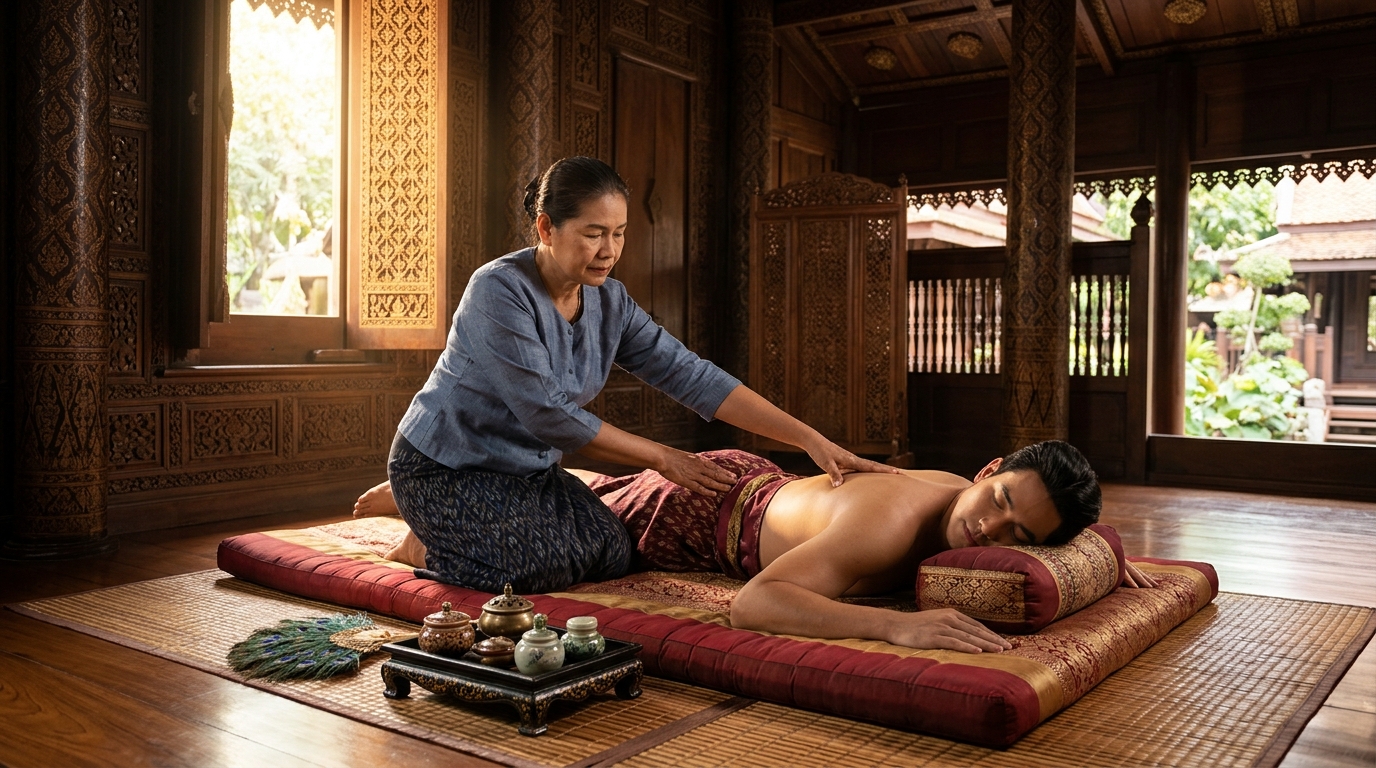
In the royal courts of ancient Siam, traditional medicine formed part of a broader culture of knowledge, care, and wellbeing. Royal households had access to physicians, herbal specialists, and practitioners who understood traditional methods of maintaining physical health.
Healing practices were valued not only for addressing discomfort but also for supporting balance and vitality. Traditional massage, herbal preparations, and other therapeutic methods formed part of the wider medical knowledge preserved and practised in Thai society.
Royal patronage also played an important role in preserving traditional medical knowledge. During the reign of King Rama III in the nineteenth century, inscriptions relating to traditional medicine, anatomy, and therapeutic knowledge were placed at Wat Pho in Bangkok. These inscriptions became an important public record of Thai medical traditions.
The stone illustrations and inscriptions at Wat Pho, including representations of the body's traditional energy pathways, helped make this knowledge accessible to future generations of practitioners and students.
This connection between royal-era preservation and public education remains an important chapter in the history of Thai massage.
Village Life: Healing Shared Within Communities
While royal households had access to specialised practitioners, traditional healing was also deeply rooted in everyday village life.
In rural communities, knowledge of massage and herbal remedies was often passed down within families. Parents and grandparents taught younger generations simple techniques to ease tired muscles, relieve everyday discomfort, and support recovery after physically demanding work.
Farmers, craftsmen, and other workers frequently performed repetitive physical activities. Traditional massage offered a familiar way to relax the body after long days of labour.
Village healing practices were often practical and personal. A family member might use gentle pressure on a tired shoulder, massage aching legs, or apply warm herbal compresses to areas of tension. These techniques were part of a wider culture of caring for relatives and neighbours.
Massage was not necessarily considered a luxury. It was a form of shared knowledge and community care, shaped by experience, observation, and generations of practice.
This tradition helped preserve Thai massage as an accessible healing practice rather than limiting it to formal medical settings.
The Role of Buddhist Temples in Preserving Thai Healing Knowledge
Buddhist temples have historically served as important centres of education, community life, and cultural preservation in Thailand.
Wat Pho, officially known as Wat Phra Chetuphon Wimon Mangkhalaram, is particularly significant in the history of traditional Thai medicine. Its connection to the preservation of massage knowledge dates back to the nineteenth century, when King Rama III commissioned the creation of educational inscriptions throughout the temple complex.
These inscriptions covered a range of subjects, including traditional medicine, anatomy, and the body's energy pathways. They helped preserve knowledge that might otherwise have remained within individual families or specialist groups.
Today, Wat Pho remains one of Thailand's best-known destinations for learning about traditional Thai massage. Its traditional medical school has helped train generations of practitioners and introduce the techniques to international visitors.
The temple represents an important bridge between historical healing traditions and contemporary Thai wellness education.
Traditional Techniques Passed Down Through Generations
The distinctive character of Thai massage comes from its combination of techniques, each reflecting generations of practical knowledge.
1. Rhythmic Pressure
Practitioners use their thumbs, palms, elbows, and other parts of the body to apply controlled pressure to different areas. The movements are traditionally guided by knowledge of Sen energy pathways.
2. Assisted Stretching
A practitioner gently guides the recipient through a series of stretches and movements. These techniques help improve flexibility and encourage a feeling of physical release.
3. Palm and Thumb Techniques
Different forms of pressure are used to address areas of muscular tension. The intensity is adjusted according to the individual's comfort and the practitioner's assessment.
4. Herbal Compress Therapy
Warm herbal compresses containing traditional plant ingredients may be applied to the body. The warmth and aromatic qualities create a soothing experience and complement massage techniques.
5. Mindful Movement and Breathing
Traditional Thai massage often follows a calm, rhythmic flow. The practitioner works with steady movements, creating an experience that encourages relaxation and awareness of the body.
Together, these techniques demonstrate how Thai massage combines physical movement, traditional knowledge, and attentive human touch.
From Traditional Healing to Modern Wellness
Over the years, Thai massage has evolved while retaining many of its traditional foundations. As Thailand became an international travel destination, visitors discovered the distinctive experience of traditional Thai bodywork.
Massage practices that were once primarily associated with family care, local healing, and traditional medical settings gradually became part of the country's wider wellness and hospitality industries.
Today, traditional Thai massage is offered in neighbourhood wellness centres, specialised massage schools, luxury hotels, and destination spas. Different treatments have also developed, combining traditional techniques with contemporary approaches to relaxation and body care.
Despite these changes, the central principles remain recognisable: rhythmic pressure, assisted stretching, mindful movement, and respect for the individual's comfort.
For many people, experiencing Thai massage is also an opportunity to connect with an important part of Thai cultural heritage.
Why Thai Massage Remains Relevant Today
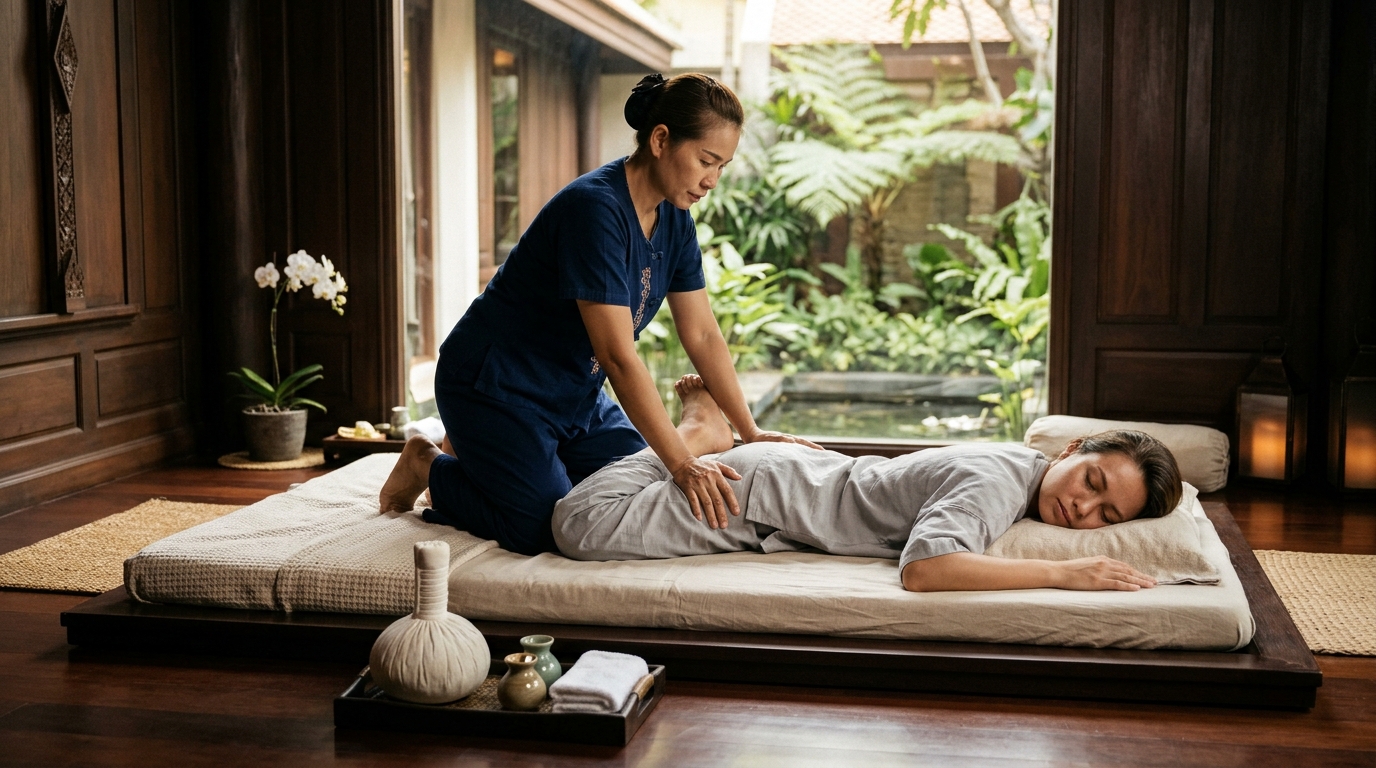
Modern lifestyles often involve long working hours, extended periods of sitting, physical inactivity, and everyday stress. These habits can contribute to muscular tension and feelings of fatigue.
Traditional Thai massage offers an opportunity to slow down and give the body time to relax. Its combination of stretching and rhythmic pressure can help promote relaxation, support a sense of mobility, and ease everyday muscular tightness.
Many people appreciate Thai massage because it is a holistic experience rather than simply a series of isolated movements. The treatment brings together physical techniques, a calm environment, and the personal attention of a trained practitioner.
However, massage is not a substitute for medical treatment. Techniques and pressure should always be adapted to individual needs, particularly for people with injuries or existing health concerns.
The continued popularity of Thai massage demonstrates how traditional practices can remain meaningful in a changing world.
Experience a Living Tradition in Bangkok
Bangkok offers many opportunities to discover the heritage of traditional Thai massage. From historic temples and traditional massage schools to contemporary wellness centres, the city brings together centuries of knowledge and modern approaches to relaxation.
For visitors, experiencing an authentic Thai massage can be more than a moment of rest during a busy trip. It can provide a deeper appreciation of the cultural traditions that have shaped Thailand's approach to health, balance, and wellbeing.
At Thai Massage Bangkok, traditional Thai massage represents a connection between past and present. Each carefully performed movement reflects a heritage built through generations of shared knowledge, practical experience, and respect for the healing power of touch.
A Tradition That Continues Through Every Touch
From the royal courts of Siam to village homes and modern wellness spaces, Thai massage has travelled through generations without losing its cultural significance.
Its story is one of preservation, adaptation, and human connection. Royal-era inscriptions helped safeguard traditional medical knowledge, while families and village practitioners ensured that everyday healing techniques remained part of community life.
Today, every traditional Thai massage session carries elements of this history. The techniques may be experienced in a modern spa, but their foundations remain rooted in centuries of Thai culture.
Thai massage is not simply a treatment passed down through time. It is a living tradition, where every touch tells a story of heritage, care, and wellbeing.