
Traditional Thai massage is a distinctive healing practice that combines assisted stretching, rhythmic pressure, joint movement, and mindful bodywork. Developed through centuries of Thai wellness traditions, it is designed to encourage physical balance, flexibility, relaxation, and a deeper sense of connection between the body and mind.
Unlike many Western-style massages that primarily focus on muscles and soft tissues, traditional Thai massage takes a more active approach. The practitioner uses their hands, thumbs, palms, elbows, knees, and sometimes feet to apply controlled pressure while guiding the recipient through a series of assisted movements and stretches.
Understanding the key techniques behind Thai massage can help visitors appreciate why this ancient treatment remains one of the most recognized wellness traditions in Thailand and why Bangkok has become such an important destination for experiencing it.
Rhythmic Pressure Along the Body
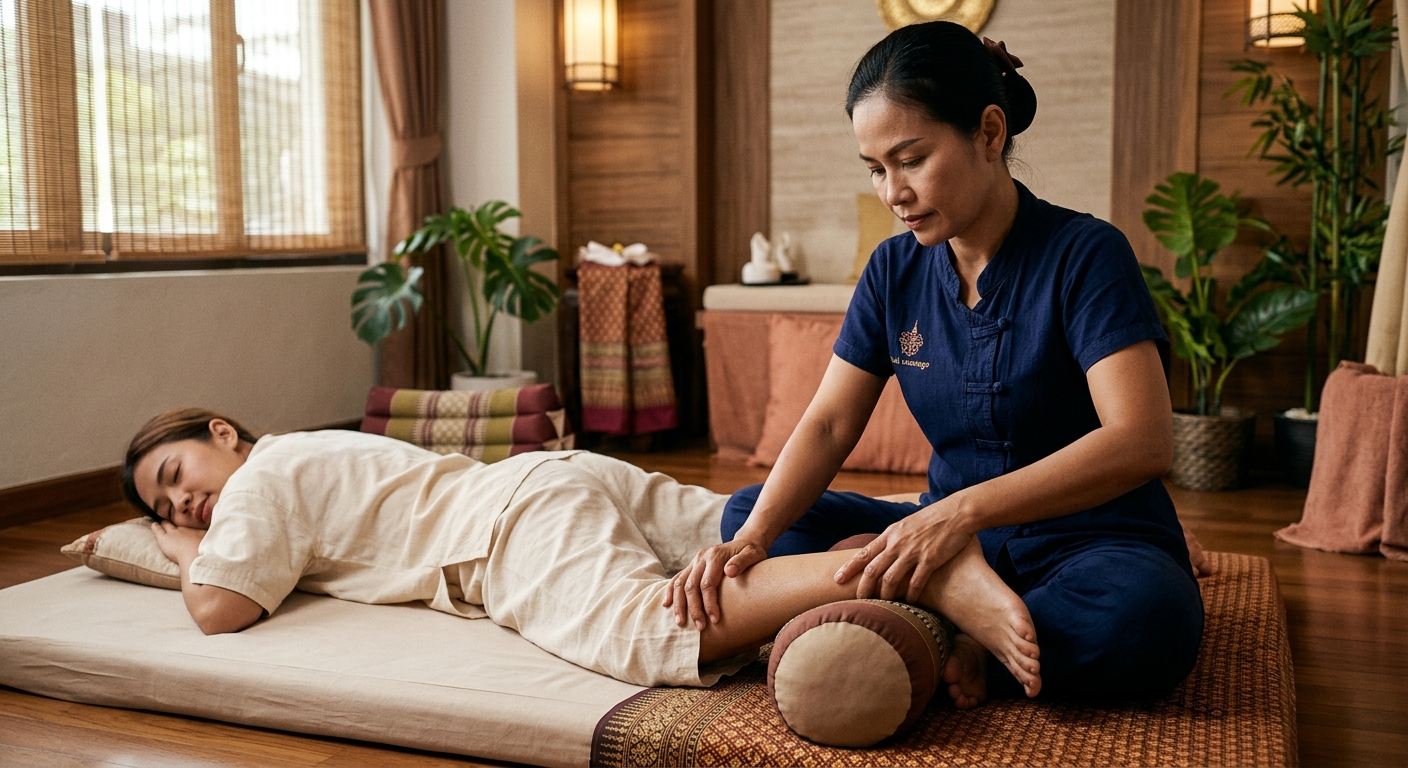
One of the defining characteristics of traditional Thai massage is rhythmic pressure. Practitioners apply steady, controlled pressure to different areas of the body using the palms, thumbs, fingers, elbows, knees, or feet.
The pressure is generally applied in a flowing sequence rather than as isolated movements. This rhythmic approach helps create a meditative quality during the treatment while allowing the practitioner to work gradually through different areas of tension.
Depending on the recipient's needs and comfort level, pressure can range from gentle and relaxing to deeper and more focused. An experienced practitioner adjusts the intensity throughout the session rather than applying the same pressure everywhere.
Sen Line Massage
Traditional Thai massage is closely associated with the concept of Sen, a network of energy pathways described in traditional Thai healing practices. Sen lines are an important part of the philosophy behind Thai massage and help guide the practitioner's movements and pressure techniques.
Rather than treating the body as a collection of separate muscles, Thai massage traditionally considers the body as an interconnected system. Practitioners may follow specific pathways with their thumbs, palms, or other parts of the body while maintaining a slow and deliberate rhythm.
Modern explanations of Thai massage may describe these techniques in terms of muscular tension, mobility, relaxation, and circulation, while the traditional approach remains rooted in the concept of balancing the body's energy pathways.
Assisted Stretching
Assisted stretching is one of the techniques that makes traditional Thai massage particularly distinctive. During a session, the practitioner carefully guides the recipient's arms, legs, hips, shoulders, and spine through controlled movements.
These stretches can resemble movements found in yoga, which is why Thai massage is sometimes described as “lazy yoga.” However, the recipient does not need to perform the movements independently. The practitioner supports and guides the body throughout each position.
Assisted stretching can help encourage greater flexibility and freedom of movement. The intensity should always remain appropriate for the individual's mobility, experience, and comfort level.
Joint Mobilization
Gentle joint mobilization is another important element of traditional Thai massage. Practitioners may use carefully controlled movements to guide joints through comfortable ranges of motion.
These movements can involve the shoulders, wrists, hips, knees, ankles, and other joints. The goal is not to force movement but to encourage smooth mobility while helping the body release areas of stiffness and tension.
Joint movements are usually integrated naturally into the wider sequence of the massage, creating a combination of pressure, stretching, and movement rather than relying on one technique alone.
Palm Pressing
Thai massage practitioners frequently use their palms to apply broader, more evenly distributed pressure. Compared with thumb pressure, palm pressing allows the practitioner to work across larger areas of the body while maintaining a smooth and rhythmic flow.
Palm pressure may be used on areas such as the back, legs, shoulders, arms, and feet. The technique can feel grounding and relaxing while helping prepare the body for deeper pressure or stretching.
Thumb Pressure
Thumb pressure allows the practitioner to work with greater precision. The thumbs can be used to apply focused pressure along particular areas and traditional Sen line pathways.
This technique is often incorporated into longer sequences rather than performed as a single isolated action. The practitioner gradually adjusts the pressure according to the body's response and the recipient's comfort.
Because thumb pressure can become intense when applied too deeply, professional Thai massage should always involve communication between the practitioner and recipient. Pain is not a requirement for an effective treatment.
Compression Techniques
Compression involves applying sustained or rhythmic pressure to muscles and soft tissues. Traditional Thai massage may combine compression with stretching and movement to create a continuous treatment sequence.
The practitioner may use the hands, palms, forearms, elbows, or other body parts depending on the technique and the area being treated. Broad compression can create a feeling of warmth and relaxation while helping prepare muscles for subsequent stretching.
Gentle Rocking and Oscillation
Rocking movements can be used to encourage relaxation and help the body move naturally. The practitioner may gently rock the legs, arms, shoulders, or torso using controlled and repetitive movements.
This technique introduces movement without requiring the recipient to actively participate. The gentle rhythm can help create a calming transition between different parts of the massage and contribute to the meditative character of traditional Thai bodywork.
Assisted Yoga-Like Positions
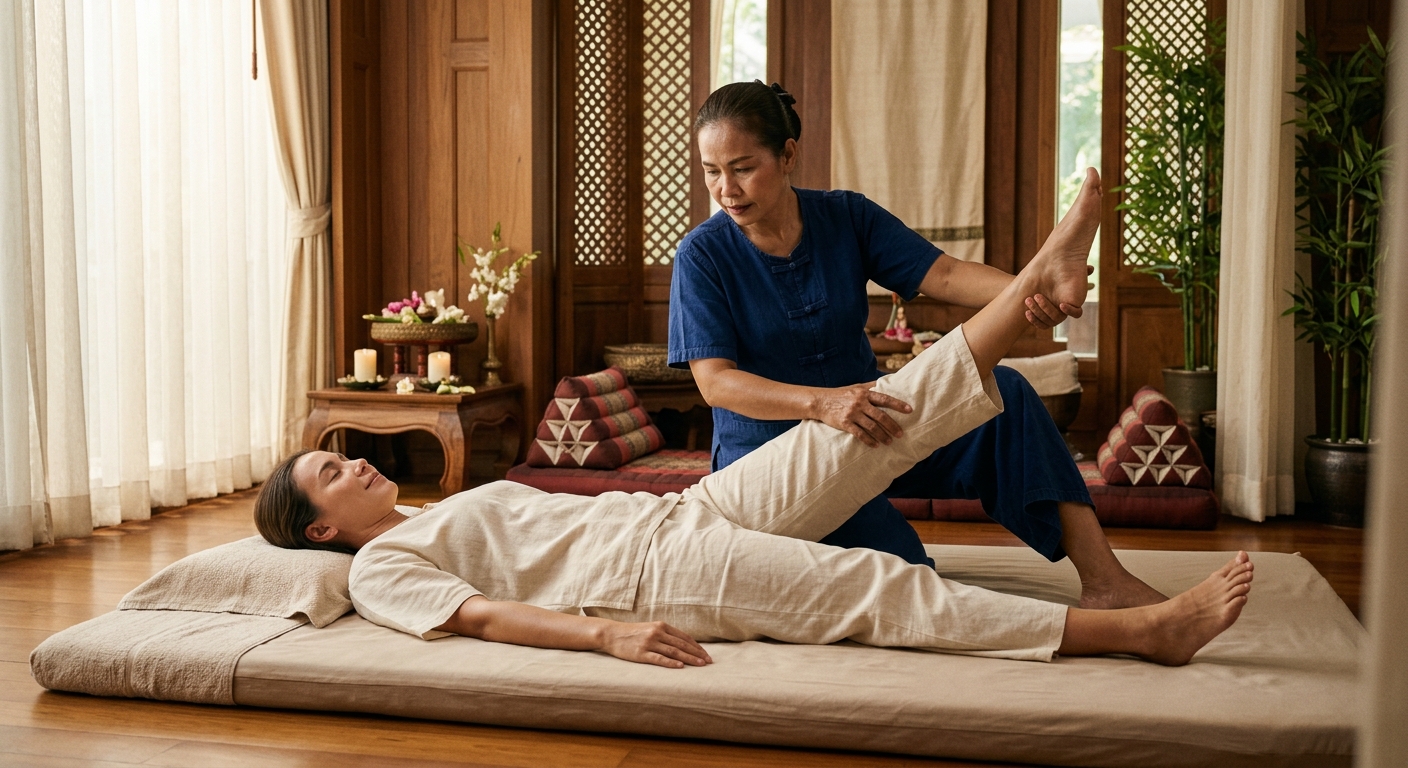
Some traditional Thai massage sequences incorporate assisted positions that resemble yoga postures. The practitioner supports the recipient while guiding the body into carefully controlled stretches.
These positions may involve the legs, hips, back, shoulders, or arms and can be adapted to the individual's flexibility. The practitioner should never force a position beyond a comfortable range.
The combination of passive stretching and pressure is one of the reasons Thai massage feels different from a conventional oil massage. The recipient remains mostly passive while the practitioner performs much of the movement.
Foot and Leg Techniques
The feet and legs play an important role in many traditional Thai massage sequences. Practitioners may use their hands, thumbs, palms, or feet to apply pressure along the legs and soles of the feet.
Footwork can be combined with stretching, compression, and joint movements. These techniques are often incorporated into a full-body treatment, helping create a balanced progression from the lower body through the upper body.
Elbow and Forearm Pressure
The elbow and forearm can provide broader or deeper pressure than the hands and thumbs. Experienced practitioners may use these techniques selectively on larger muscle groups where appropriate.
Forearm techniques can create smooth, gliding pressure across larger areas, while the elbow can provide more concentrated pressure. These methods require good control and an understanding of anatomy to ensure that pressure remains safe and comfortable.
A Continuous Full-Body Sequence
Perhaps the most important characteristic of traditional Thai massage is the way individual techniques are connected into a complete sequence. Pressure, stretching, compression, rocking, and joint movements are not necessarily performed as separate treatments. They are combined into a structured flow.
A traditional session may move gradually from the feet and legs toward the torso, arms, shoulders, neck, and head, depending on the style and practitioner. The sequence can create a sense of continuity in which one technique prepares the body for the next.
Why These Techniques Make Thai Massage Unique
The combination of pressure, stretching, movement, and traditional Sen line concepts gives Thai massage its distinctive character. Instead of simply lying still while muscles are massaged, the recipient experiences a more interactive form of bodywork in which the practitioner moves and supports the body.
This approach can make Thai massage particularly appealing to people looking for relaxation while also wanting to explore flexibility, mobility, and a different style of traditional bodywork. The experience can vary considerably depending on the practitioner's training, the specific Thai massage tradition being practiced, and the individual's preferences.
What to Expect During a Traditional Thai Massage
Traditional Thai massage is commonly performed fully clothed, usually on a comfortable mat or padded surface. Loose and comfortable clothing allows the body to move easily during assisted stretches.
Unlike an oil massage, traditional Thai massage generally does not require the use of massage oil. The practitioner works through clothing using pressure, compression, stretching, and movement techniques.
A typical session may begin with gentle pressure and rhythmic movements before gradually incorporating more focused techniques and assisted stretches. The practitioner should communicate with the recipient and modify movements whenever necessary.
Choosing an Authentic Thai Massage Experience in Bangkok
Bangkok offers a wide range of massage experiences, from traditional local massage establishments to luxury wellness centers and specialized spas. When looking for an authentic Thai massage experience, it is worth considering the practitioner's training, the type of massage offered, the treatment environment, and whether the techniques are adapted to individual needs.
A quality Thai massage experience should feel controlled, intentional, and respectful of the recipient's comfort. Stronger pressure does not necessarily mean better results. Skilled practitioners understand how to combine traditional techniques with appropriate pressure and movement.
Experience the Tradition of Thai Massage
Traditional Thai massage is more than a sequence of stretching and pressure techniques. It represents a holistic approach to bodywork shaped by Thai healing traditions and passed down through generations.
From rhythmic palm pressure and precise thumb work to assisted stretching, joint mobilization, compression, and gentle rocking, each technique contributes to the distinctive experience of Thai massage. Understanding these techniques allows visitors to appreciate the treatment more deeply and choose an experience that matches their wellness goals.
Whether you are visiting Bangkok for the first time or already familiar with Thai massage, exploring its traditional techniques can provide a deeper understanding of one of Thailand's most enduring wellness traditions.