
Thai massage is widely recognised for its distinctive combination of rhythmic pressure, assisted stretching, mindful movement, and traditional healing knowledge. Yet beyond the physical techniques lies another important dimension: the cultural etiquette that shapes how practitioners approach their work, interact with clients, and preserve the values of traditional Thai wellness.
Known in Thai as Nuad Thai, traditional Thai massage is more than a method of relaxation. It is part of Thailand's traditional healthcare heritage, shaped by generations of practical knowledge and community-based care. In 2019, UNESCO inscribed Nuad Thai on its Representative List of the Intangible Cultural Heritage of Humanity, recognising its cultural significance and the importance of safeguarding the practice for future generations.
Understanding the etiquette behind Thai massage offers a deeper appreciation of the experience. From the importance of respectful communication to the rhythm of traditional techniques, each aspect can contribute to an atmosphere of trust, comfort, and mindful care.
For visitors discovering Thai massage in Bangkok, learning about these traditions can make a treatment more meaningful while helping them appreciate the skill and professionalism of the practitioner.
The Cultural Foundations of Traditional Thai Massage
Traditional Thai massage developed through generations of healing practices passed between families, communities, and trained practitioners. Historically, local healers often helped people manage muscle aches and physical discomfort associated with agricultural work and everyday activities. Over time, these practices evolved into more formal systems of traditional therapeutic knowledge.
A central idea in this heritage is that massage involves more than applying pressure to tired muscles. Traditional Thai massage incorporates an understanding of the body's movement, flexibility, and interconnectedness. Practitioners use techniques such as compression, stretching, and rhythmic pressure to support physical comfort and mobility.
Traditional explanations also refer to sen, energy pathways believed to run throughout the body. Within this framework, massage is intended to support balance and the smooth flow of energy. These concepts form part of traditional Thai healing philosophy and should be understood within their cultural context rather than as a substitute for modern medical explanations.
Equally important is the human relationship between practitioner and recipient. In traditional community settings, massage could express care for family members, neighbours, and others experiencing physical discomfort. This association with kindness and service remains an important part of how many people understand the practice today.
The cultural etiquette surrounding Thai massage therefore begins with a simple principle: the treatment should be approached as an act of attentive care, supported by knowledge, experience, and respect.
Respect for Teachers and the Wisdom of Previous Generations
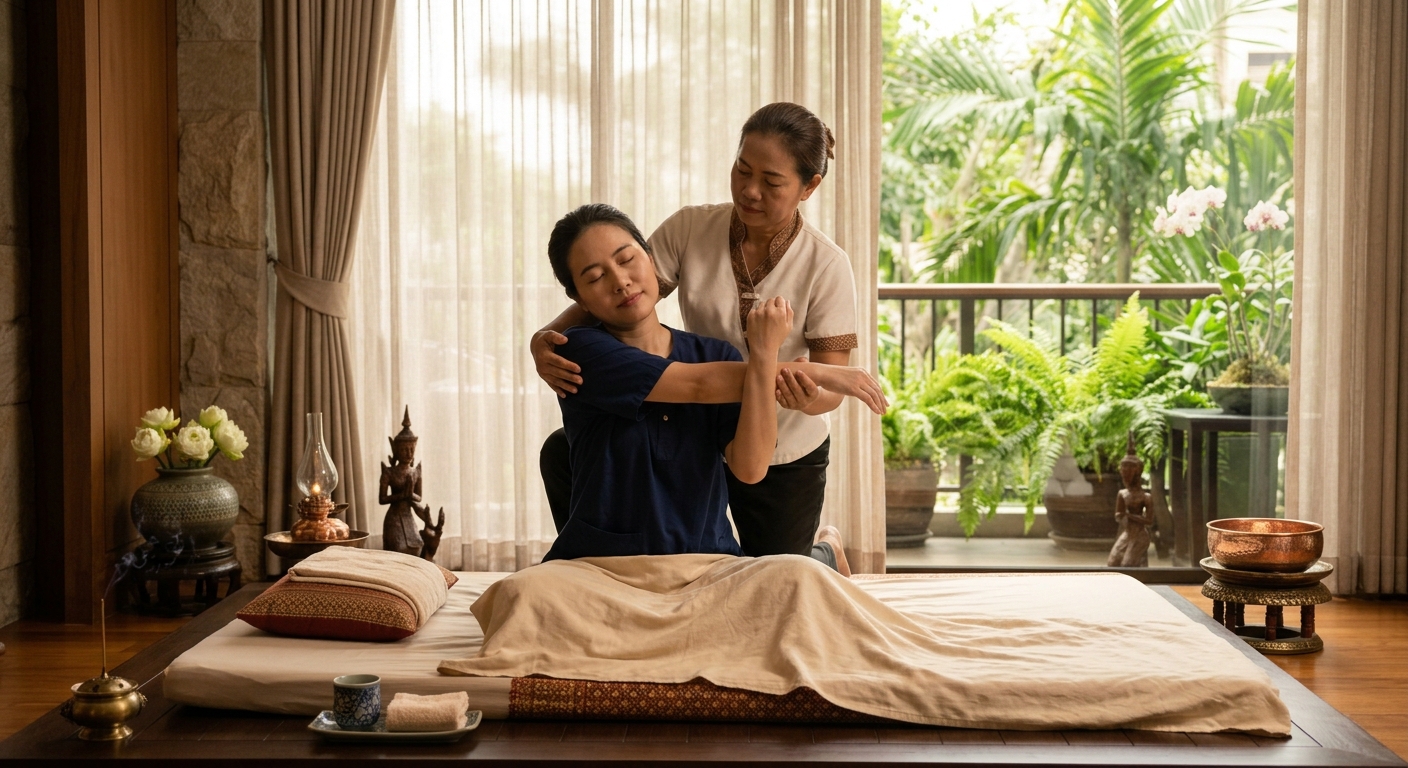
Respect for teachers is an important value in many Thai traditional arts, including traditional massage. Knowledge is passed from experienced practitioners to students, who learn not only physical techniques but also professional conduct and the responsibilities associated with caring for another person.
Some traditional Thai massage practitioners observe a practice known as Wai Khru, a ceremony or expression of gratitude to teachers and mentors. In the context of traditional massage, such observances may acknowledge the people who transmitted the knowledge and helped preserve the discipline. Practices vary between schools, teachers, and individual practitioners, so not every massage session includes a visible ceremony.
This respect for teachers highlights the importance of learning massage through appropriate instruction rather than relying solely on imitation. Correct positioning, suitable pressure, an understanding of body mechanics, and awareness of a client's limitations all require training and practice.
For professional therapists, respecting the tradition means continuing to develop their skills and recognising the responsibility involved in applying physical techniques to another person.
For clients, understanding this background encourages appreciation for the practitioner's training and expertise. A Thai massage is not simply a sequence of movements; it reflects knowledge that has been developed, adapted, and passed down over time.
The Wai: A Gesture of Welcome and Courtesy
One of the most recognisable gestures in Thai culture is the wai, performed by bringing the palms together near the chest or face and offering a slight bow of the head. It can communicate greeting, gratitude, respect, or an apology, depending on the context and relationship between the people involved.
In a spa or massage setting, a practitioner may greet a guest with a wai as a welcoming gesture. The interaction helps establish a polite and comfortable atmosphere before the treatment begins.
Visitors do not need to master every detail of Thai social etiquette to show appreciation. A friendly smile, a calm greeting, and a respectful response are usually sufficient. Returning a wai can be a thoughtful gesture, but it is not necessary to imitate every movement or worry about performing it perfectly.
The significance of the wai lies in its expression of courtesy rather than in the precision of the gesture itself.
This spirit of mutual respect can continue throughout the massage experience. Speaking politely, listening carefully, and acknowledging the practitioner's efforts help create a welcoming environment for both parties.
Modesty, Comfort, and Appropriate Professional Boundaries
Thai massage can involve close physical contact, assisted stretching, and pressure applied through different parts of the practitioner's body. For this reason, clear boundaries and respectful conduct are essential.
Traditional Thai massage is commonly performed with the client wearing loose, comfortable clothing, allowing the therapist to work through compression and stretching techniques without requiring direct contact with bare skin. Other massage styles, including oil massage, may follow different clothing and draping practices.
Before treatment begins, the practitioner should explain the process, clarify any relevant preferences, and provide appropriate instructions about changing clothes or positioning the body. Clients should have the opportunity to ask questions and communicate any concerns before the session starts.
Modesty should never come at the expense of comfort or consent. A professional massage environment should protect privacy, use suitable coverings where necessary, and ensure that the client understands what to expect.
Cultural tradition does not remove the need for clear communication. If a client feels uncomfortable with a particular position, technique, or level of physical contact, they should be able to say so without embarrassment.
Likewise, practitioners should respect personal boundaries and adapt their approach when appropriate. The purpose of professional etiquette is not merely to follow established customs but to make the treatment safe, respectful, and comfortable.
The Rhythm of Thai Massage: Why Pace and Awareness Matter
The word "rhythm" in traditional Thai massage refers to more than the sequence of physical movements. It also describes the practitioner's attention to pacing, transitions, and the body's response to pressure.
Unlike a massage based entirely on continuous gliding strokes, traditional Thai massage often combines steady compression, rocking movements, assisted stretches, and carefully coordinated changes in body position. The practitioner may move progressively from one area to another, adjusting the pace according to the technique and the client's needs.
This measured approach can make a session feel more cohesive. Instead of applying pressure randomly, a trained practitioner follows a structured sequence while remaining attentive to the individual receiving the treatment.
Rhythm also requires patience. Moving too quickly between techniques or forcing a stretch beyond a comfortable range can undermine the experience. Controlled movements, clear communication, and an appropriate level of pressure are more important than attempting to reproduce dramatic movements often seen in photographs or videos.
Clients can contribute to this process by breathing naturally and communicating how the treatment feels. If a stretch feels excessive or a movement causes discomfort, the practitioner should be informed immediately.
The goal is not to endure the strongest possible pressure. It is to find an appropriate balance between technique, comfort, and relaxation.
Understanding the Cultural Significance of the Head and Feet
In Thai culture, the head is traditionally regarded as a particularly respected part of the body, while the feet are often treated with greater caution in social situations. These cultural associations are important to understand, although customs can vary according to context, generation, and individual preference.
In everyday interactions, touching another person's head without permission may be considered inappropriate. Similarly, pointing the feet directly at another person or using them in a disrespectful gesture can cause offence.
Traditional Thai massage requires a more nuanced understanding of these conventions. Feet, hands, forearms, elbows, and other parts of the practitioner's body may be used in certain established massage techniques. Their use within a trained therapeutic practice should not automatically be interpreted as disrespectful.
Some traditional massage styles are more formal and restrictive in their physical contact than others. The royal court style, for example, has historically followed particular rules regarding positioning and the use of the practitioner's hands.
The important distinction is between a purposeful, professionally applied technique and a careless or disrespectful gesture. The context, training, and intention behind the movement all matter.
For visitors, there is no need to feel anxious about every aspect of body positioning. A reputable practitioner will guide the session, explain unfamiliar movements when necessary, and maintain appropriate professional standards.
Communication: The Foundation of a Respectful Treatment
Good communication is one of the most practical expressions of etiquette in a modern Thai massage setting. Although traditional techniques have established principles, each client has different preferences, physical limitations, and expectations.
Before a session, clients should tell the practitioner about relevant concerns, such as areas of muscular tension, recent injuries, sensitive areas, or movements they would prefer to avoid. They should also mention relevant medical conditions or circumstances that may affect whether certain techniques are appropriate.
During the massage, communication can be simple and direct. Clients may request lighter or firmer pressure, ask for a stretch to be modified, or explain that a particular position is uncomfortable. The practitioner should respond professionally and adjust the treatment when appropriate.
It is important to distinguish therapeutic pressure from pain that signals a problem. Thai massage can involve strong sensations and deep stretching, but sharp pain, numbness, tingling, dizziness, or significant discomfort should not be ignored.
Clients should never feel obliged to remain silent to appear polite. Respect is mutual, and speaking up about discomfort helps the practitioner deliver a more suitable treatment.
For international visitors in Bangkok, a few simple phrases can be useful:
- Bao bao — Lightly or gently.
- Nák nòi — A little heavier or stronger, depending on context.
- Jèp — It hurts.
- Phǒm / Chǎn mâi sà-baai — I am uncomfortable or not feeling well, with the first form commonly used by men and the second by women.
Pronunciation and usage can vary, and gestures may help clarify meaning. A professional therapist should also be able to work with simple verbal instructions or other clear communication methods.
Ultimately, effective communication is not separate from traditional etiquette. It is one of the ways respect becomes visible in practice.
Preparing the Space: Cleanliness, Calm, and Consideration
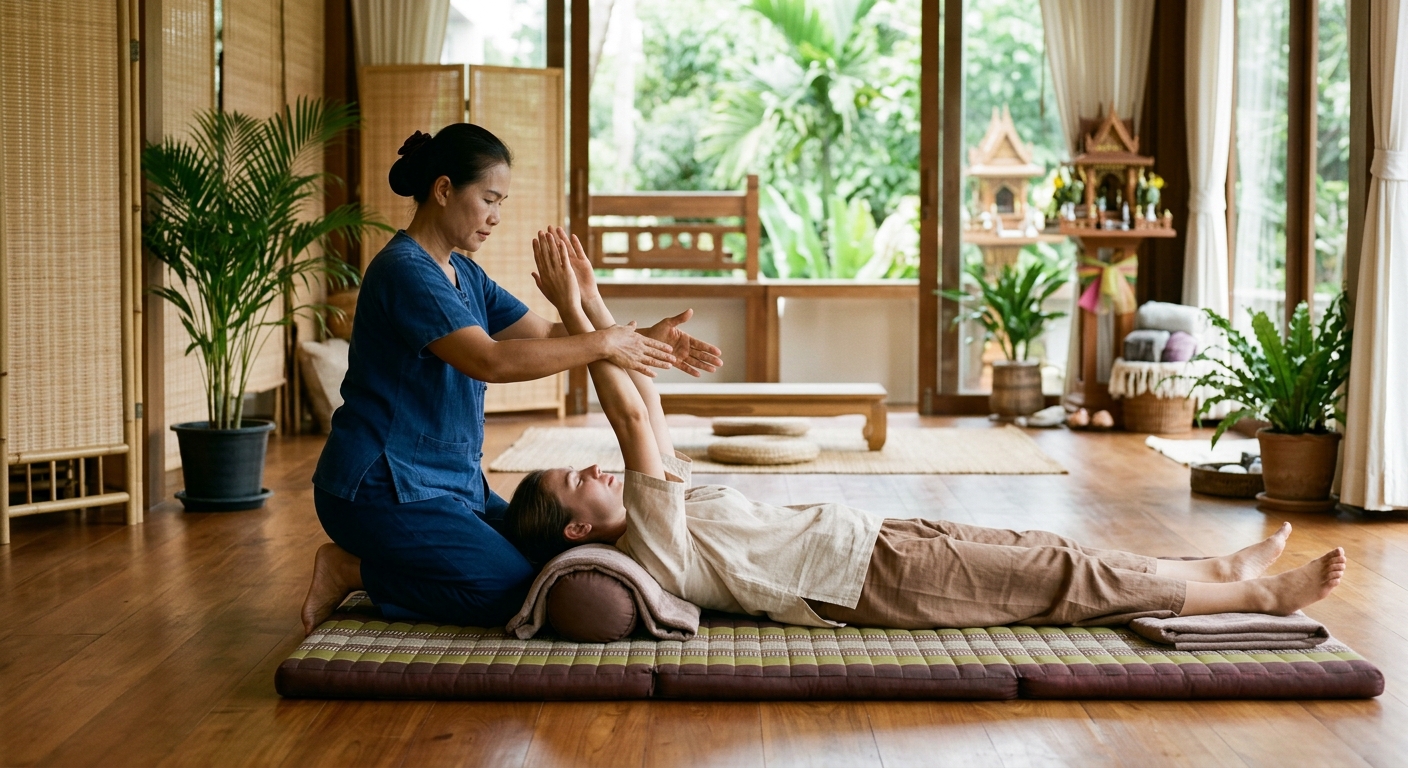
The environment surrounding a massage can influence how comfortable and relaxed a client feels. Cleanliness, privacy, appropriate lighting, and a peaceful atmosphere are important elements of a professional treatment space.
In many Thai wellness settings, guests are invited to remove their shoes before entering designated treatment areas. Where this practice applies, following the staff's instructions demonstrates consideration for the space and the people who maintain it.
Clients should arrive on time, keep their belongings organised, and silence their phones to minimise interruptions. If they need to make a request before the session begins, communicating it calmly allows the practitioner to prepare appropriately.
Practitioners, in turn, should maintain clean linens, sanitised equipment where relevant, suitable treatment clothing, and hygienic working practices. They should also explain the use of any herbal compresses, oils, or other products that form part of the treatment.
A peaceful environment does not depend on elaborate decoration. What matters most is that the space feels clean, private, and professionally managed.
These details may appear small, but together they establish the conditions needed for a comfortable and respectful experience.
Gratitude, Payment, and Tipping Etiquette
Gratitude is an important part of many Thai social interactions, and a massage session offers several simple opportunities to express it.
A sincere khop khun khrap or khop khun kha — thank you, using commonly masculine and feminine polite particles respectively — is a courteous way to acknowledge the practitioner's work. A smile and a brief expression of appreciation are equally appropriate.
Payment should follow the spa's stated prices and procedures. If the establishment charges a service fee or specifies other terms, clients should check these details before treatment rather than making assumptions.
Tipping is not a universal obligation, and expectations can vary between businesses. Some guests choose to leave an additional amount when they are satisfied with the service, while others simply pay the agreed price. Visitors should follow the establishment's policy and their own budget rather than feeling pressured by uncertain cultural expectations.
In traditional community-based settings, massage historically played a role in reciprocal care and social solidarity. Contemporary commercial spas operate under different arrangements, where practitioners provide professional services in exchange for payment.
Recognising this distinction helps visitors appreciate the tradition without confusing historical customs with modern business practices.
The most important expression of gratitude is respectful behaviour, fair payment, and appreciation for the skill involved in the treatment.
Cultural Tradition and Modern Professional Standards
Thai massage continues to evolve as it is practised in local communities, training schools, wellness centres, and international spa environments. While traditional values remain important, professional standards are also essential to the modern experience.
A responsible practitioner combines knowledge of traditional techniques with an understanding of anatomy, appropriate pressure, hygiene, and client safety. They should recognise when a technique needs to be modified and when a client may require advice from a qualified healthcare professional instead of massage.
Clients should be particularly careful when considering forceful stretches or deep pressure if they have an injury, recent surgery, certain medical conditions, or other circumstances that may increase the risk of harm. Pregnancy also calls for appropriate assessment and a suitably trained practitioner. When in doubt, clients should seek medical guidance before booking a treatment.
Cultural respect should never be used to justify ignoring pain, avoiding necessary questions, or continuing a technique that feels unsafe. A traditional practice can be honoured while still respecting individual needs and contemporary professional responsibilities.
For spas in Bangkok, preserving the spirit of Thai massage means providing an experience that is both culturally informed and professionally delivered. This includes respecting the client's dignity, protecting privacy, and ensuring that every treatment is adapted to the person receiving it.
How Visitors Can Show Respect When Receiving Thai Massage
Visitors do not need extensive knowledge of Thai culture to enjoy a traditional massage respectfully. A few practical habits can help make the experience smoother and more rewarding.
- Arrive prepared. Allow enough time to check in, discuss preferences, and settle into the treatment environment without rushing.
- Follow the practitioner's instructions. If the therapist asks you to change position or relax a particular part of your body, follow the guidance when comfortable and ask for clarification if necessary.
- Communicate honestly. Explain your pressure preferences and tell the therapist immediately if something feels painful or uncomfortable.
- Respect privacy. Follow instructions about clothing, coverings, phones, and the use of treatment areas.
- Keep an open mind. Traditional Thai massage may include movements that differ from Western-style oil massage. Ask questions rather than assuming that every technique serves the same purpose.
- Recognise the practitioner's expertise. A trained therapist applies techniques according to their knowledge and the needs of the client. Respectful questions are welcome, but avoid demanding movements that the practitioner considers unsuitable.
- Express gratitude naturally. A polite thank-you is sufficient. Cultural appreciation is best expressed through sincere behaviour rather than the performance of unfamiliar rituals.
These simple habits allow visitors to engage with Thai massage in a way that respects both the cultural tradition and the professional relationship.
Respect and Rhythm as the Heart of Thai Wellness
Respect and rhythm are closely connected in traditional Thai massage. Respect shapes the relationship between practitioner and client, while rhythm guides the physical flow of the treatment.
A thoughtful practitioner pays attention to the client's comfort, adjusts pressure with care, and moves through techniques with purpose. A considerate client communicates openly, follows reasonable guidance, and appreciates the skill involved.
Neither person needs to follow a rigid script. Instead, a positive experience develops through mutual understanding, professional boundaries, and attention to the needs of the moment.
The cultural significance of Thai massage also extends beyond an individual appointment. Every responsible practitioner contributes, in their own way, to the continuation of a tradition that has been passed down through generations. Preserving that heritage involves more than repeating familiar movements; it requires maintaining the knowledge, values, and standards that give the practice its meaning.
For visitors exploring Bangkok's wellness culture, understanding these principles can turn a massage from a simple relaxation activity into a more informed cultural experience.
Conclusion: An Experience Rooted in Care and Cultural Understanding
Thai massage brings together physical technique, traditional knowledge, and a distinctive approach to mindful care. Its etiquette reflects values of respect for teachers, courtesy in personal interactions, consideration for the treatment environment, and attentiveness to the person receiving the massage.
The most meaningful way to appreciate this heritage is not to memorise every custom, but to approach the experience with curiosity, communicate clearly, and treat the practitioner with the same respect expected in return.
Whether receiving a traditional Thai massage for the first time or returning for a familiar treatment, visitors can discover that the experience is about more than pressure and stretching. It is also about the relationship between movement and stillness, technique and awareness, and tradition and contemporary wellness.
In Bangkok, where traditional practices coexist with modern spa experiences, respect and rhythm remain valuable principles for enjoying Thai massage with greater understanding and appreciation.