
Traditional Thai massage is more than a relaxing treatment. Rooted in centuries-old Thai healing traditions, it combines acupressure, assisted stretching, rhythmic movement, and therapeutic bodywork to create a unique full-body experience. Unlike many Western-style massages, traditional Thai massage is usually performed fully clothed and does not typically involve massage oil.
For first-time visitors, the experience can feel quite different from a conventional spa massage. Instead of simply lying still while a therapist works on your muscles, you may be guided through a series of gentle stretches and movements designed to encourage mobility, release muscular tension, and promote a sense of physical balance.
Whether you are visiting Bangkok for the first time or looking for an authentic Thai wellness experience, understanding what happens during a traditional Thai massage session can help you feel more comfortable and prepared.
What Is Traditional Thai Massage?
Traditional Thai massage, often known as Nuad Thai, is a form of therapeutic bodywork that combines pressure, stretching, movement, and rhythmic techniques. The therapist uses their hands, thumbs, palms, elbows, knees, and sometimes feet to apply controlled pressure to different areas of the body.
A traditional session may include work on the feet, legs, hips, back, shoulders, arms, hands, neck, and head. The exact sequence varies depending on the therapist, the style of Thai massage, the length of the treatment, and the individual needs of the client.
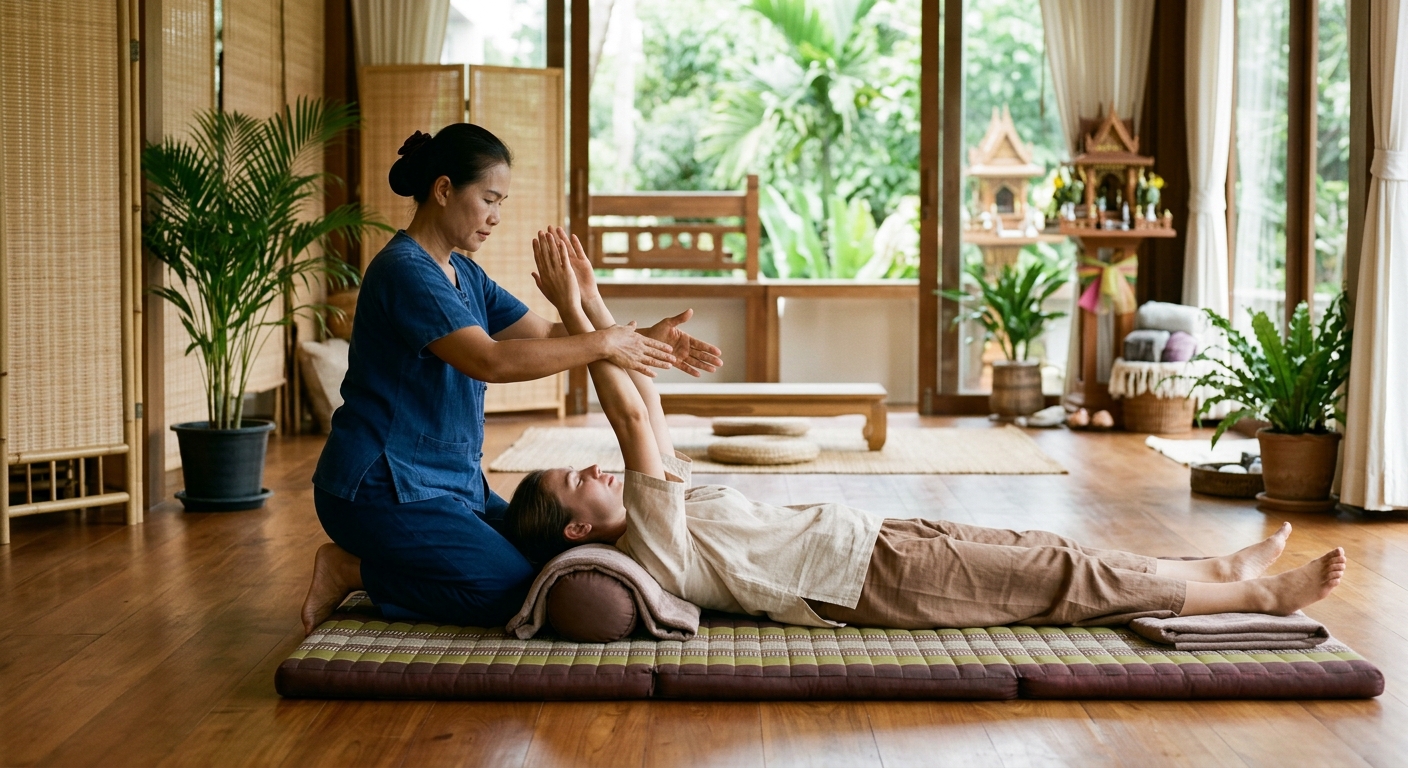
One of the defining characteristics of Thai massage is assisted stretching. The therapist may carefully move your arms, legs, or torso into different positions while applying pressure to selected areas. These movements can create a feeling of lengthening and release throughout the body.
Before Your Thai Massage Begins
Your experience generally begins with a short consultation. The therapist may ask about areas of tension, previous injuries, physical discomfort, or any preferences you have regarding pressure.
This is an important opportunity to communicate with your therapist. If you are new to Thai massage, let them know. They can explain what to expect and adjust the intensity and movements according to your comfort level.
You should also mention any relevant physical limitations before the treatment begins. Clear communication allows the therapist to modify certain techniques and avoid movements that may not be appropriate for you.
What Do You Wear for Traditional Thai Massage?
Traditional Thai massage is generally performed while wearing comfortable, loose-fitting clothing. Many massage centers provide traditional Thai massage clothing for guests, while others allow you to wear suitable clothes of your own.
Loose trousers and a comfortable top are ideal because the treatment involves stretching and movement. Clothing should allow your arms and legs to move freely without restricting the body.
Unlike an oil massage, traditional Thai massage normally does not require you to undress. This makes it particularly convenient for travelers who want to experience Thai bodywork while remaining fully clothed.
The Session Usually Begins With the Feet and Legs
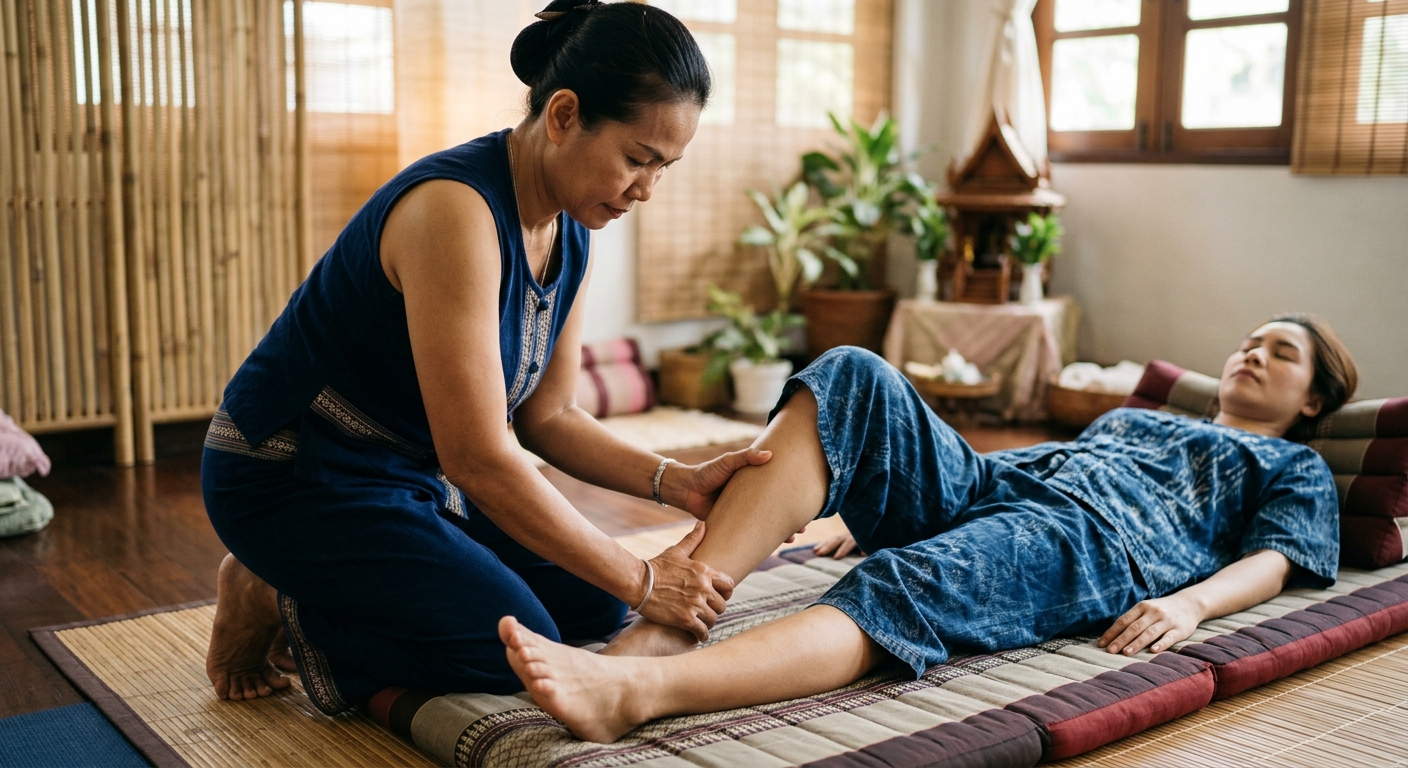
Many traditional Thai massage sessions begin with the feet and lower legs. The therapist may use their thumbs, palms, or hands to apply pressure to different areas of the feet before gradually working upward.
The legs may then receive a combination of compression, rhythmic pressure, stretching, and gentle movement. Depending on the style of treatment, the therapist may also guide your legs through assisted stretches.
For people who spend long hours walking around Bangkok, sightseeing, standing at work, or exercising, this part of the treatment can feel especially restorative.
Pressure, Compression, and Rhythmic Movement
Pressure is one of the most recognizable elements of traditional Thai massage. The therapist may apply sustained pressure using their thumbs, palms, elbows, or other parts of the body.
The pressure is often combined with rhythmic movements rather than being applied continuously at the same intensity. You may notice the therapist gradually increasing or decreasing pressure depending on the area being treated.
A good Thai massage should not simply be about tolerating as much pressure as possible. Communication is important. If a technique feels too intense, uncomfortable, painful, or produces a sharp sensation, tell your therapist so the technique can be adjusted.
Assisted Stretching Is a Key Part of the Experience
One of the biggest differences between traditional Thai massage and many other massage styles is the amount of assisted stretching involved.
Your therapist may gently move your legs, arms, shoulders, or back through controlled positions. Some movements can resemble gentle yoga stretches, which is why Thai massage is sometimes described as a form of assisted yoga.
The therapist controls the movement while you remain relaxed and allow your body to follow the technique. You should never feel that you need to force a stretch or actively push yourself into a position.
Work on the Back, Shoulders, and Hips
After working through the lower body, the therapist may move toward the hips, back, shoulders, and arms. These areas can receive a combination of compression, pressure, stretching, and rhythmic movements.
For people who spend significant amounts of time sitting at a desk, using computers, traveling, or carrying bags, the shoulders, upper back, and hips may receive particular attention.
The therapist may also adapt the sequence based on your feedback. If you have a specific area that feels tight, mention it before or during the treatment rather than assuming the therapist will automatically identify it.
Neck, Shoulders, Arms, and Hands
The upper body is often treated toward the later part of the session. The therapist may work around the shoulders and upper back before moving to the arms, hands, and neck.
Gentle pressure and stretching techniques can create a feeling of release across areas that commonly become tense during daily activities. If you spend many hours typing, using a phone, driving, or working at a desk, the hands, wrists, shoulders, and neck may particularly benefit from focused attention.
Neck techniques should always be performed with care. Your therapist should work within a comfortable range of movement rather than forcing the neck into a position.
What Does a Traditional Thai Massage Feel Like?
The sensation of Thai massage can vary considerably from one person to another. Some techniques may feel deeply relaxing, while others may create a sensation of pressure, stretching, or muscular release.
Unlike a gentle oil massage, traditional Thai massage can feel more active because the body is regularly repositioned and stretched. You may experience periods of stillness followed by rhythmic pressure or assisted movement.
The goal should not be to endure discomfort. Effective Thai massage depends on appropriate pressure, controlled movement, and communication between the therapist and client.
How Long Does a Thai Massage Session Last?
Traditional Thai massage sessions are available in a variety of durations. Shorter treatments may focus on particular areas, while longer sessions allow the therapist more time to work through the entire body.
A 60-minute session can provide an introduction to traditional Thai bodywork, while 90- or 120-minute sessions allow for a more comprehensive treatment and a slower pace.
If this is your first Thai massage, choosing a moderate session length can be a good way to become familiar with the techniques and understand how your body responds.
What Happens After the Massage?
After the session, you may notice a feeling of relaxation and increased awareness of your body. Some people feel refreshed and energized, while others prefer to take some quiet time before returning to their daily activities.
It is a good idea to stand up slowly after a longer treatment, particularly if you have been lying or sitting in one position for an extended period. Give yourself a moment to adjust before walking away.
Drinking water and allowing yourself some time to relax after the treatment can also make the transition back into your day more comfortable.
How to Get the Most From Your Thai Massage
- Arrive with enough time: Avoid rushing immediately before your appointment.
- Wear comfortable clothing: Choose loose clothing that allows easy movement.
- Communicate clearly: Tell your therapist about areas of tension, preferences, or physical limitations.
- Do not compete with the pressure: More pressure is not necessarily better.
- Relax during stretches: Allow the therapist to guide your movements instead of forcing the stretch.
- Speak up if something feels wrong: Sharp pain or excessive discomfort should not be ignored.
- Allow time afterward: If possible, avoid immediately rushing into a demanding activity after a long session.
Traditional Thai Massage in Bangkok
Bangkok is one of the best places to explore traditional Thai massage because the city offers everything from contemporary wellness spas to establishments specializing in traditional Thai bodywork.
When choosing a massage center, look beyond the appearance of the venue. Consider the experience and training of the therapists, the cleanliness of the facility, the treatment description, the communication provided before the session, and whether the massage style matches what you are looking for.
Authentic Thai massage can be experienced in many different settings, but the quality of the treatment ultimately depends on the therapist's technique, understanding of the body's movement, and ability to adapt the session to the individual.
Is Traditional Thai Massage Right for You?
Traditional Thai massage can be an interesting choice for people who enjoy active bodywork, assisted stretching, and a treatment that combines relaxation with movement. It may be particularly appealing if you prefer to remain clothed and want an alternative to oil-based massage.
However, Thai massage involves physical pressure and movement, so it may not be suitable for everyone. People with significant injuries, certain medical conditions, recent surgery, or other health concerns should discuss the treatment with an appropriate healthcare professional before booking a session.
A Traditional Wellness Experience in Thailand
A traditional Thai massage session is best understood as an interaction between pressure, movement, stretching, rhythm, and relaxation. Rather than simply focusing on one muscle at a time, the treatment creates a flowing sequence that moves through different parts of the body.
For first-time visitors, knowing what to expect can make the experience much more enjoyable. Wear comfortable clothing, communicate openly with your therapist, remain relaxed during assisted stretches, and remember that the best session is not necessarily the strongest one.
Whether you are looking for a relaxing break after exploring Bangkok, a traditional wellness experience, or an introduction to Thailand's historic bodywork traditions, Thai massage offers a distinctive way to experience an important part of Thai culture and wellness.