Silence During Thai Massage: When to Enjoy It and When to Speak
A quiet room can make it easier to notice a change in pressure. It can also make a guest reluctant to interrupt.
A quiet room can make it easier to notice a change in pressure. It can also make a guest reluctant to interrupt.
The most useful outcome of a massage on a difficult day may be an uninterrupted hour away from a screen. That is meaningful on its own.
A figure traced with lines on a temple wall can look surprisingly like an anatomy chart.
The clearest sign of skill can be a movement the therapist decides to leave out.
A programmed chair can repeat a sequence with precision. A therapist can notice hesitation and stop before the guest says a word.
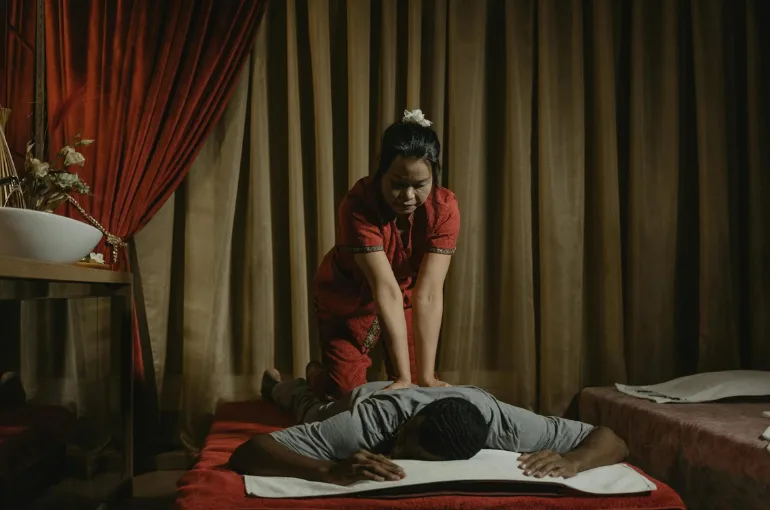
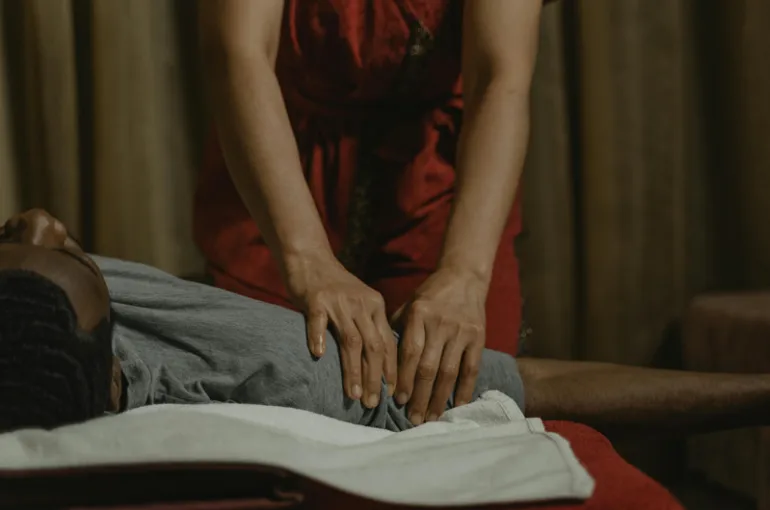
The most unfamiliar part of a first Thai massage may be how much happens while you remain clothed. A typical traditional session can combine sustained contact and assisted movement.
Rather than memorising a catalogue of manoeuvres, pay attention to what the contact is doing. Is the practitioner holding steady, changing pressure rhythmically or helping a limb move?
A family member’s demonstration, a temple inscription and a modern school syllabus each preserve something different.
An impressive photograph of a deep stretch tells you little about the quality of an appointment. Ten quieter features give a visitor a better way to recognise the craft of Nuad Thai.
A private room, a modern table or an online reservation does not tell you what style of massage you are buying. The menu description does.
“Office syndrome” is a familiar phrase in Bangkok wellness menus, but it tells a therapist very little about where you hurt.
An appointment chosen for relaxation can become one more deadline if it ends five minutes before a dinner reservation.